What Is Zingyzon.com? A Clear, Evidence-Based Breakdown (2026)
If you have searched for Zingyzon.com, you have probably noticed something strange: every review seems to describe a different website. One calls it a home blog. Another calls it a digital marketing agency. A third says it is an earning platform. That confusion is not your fault—the public record is genuinely messy. This guide separates what is confirmed from what is speculation, so you can decide whether to read the site, link to it, or move on. You will learn what Zingyzon.com actually publishes, why reviews disagree, how to verify it yourself in five minutes, and what remains genuinely unknown.
Quick Overview
- What it is: A multi-topic content blog covering home, kitchen, lifestyle, and digital guides.
- What it is not: An online store, a checkout page, or a confirmed corporate entity.
- Why it is confusing: Review sites contradict each other, and lookalike domains add noise.
- Safety status: No confirmed scam reports, but trust signals are thin—no cart and no verified business registration.
- Best approach: Read it as a blog. Do not enter payment details on any site claiming to be a “Zingyzon store.”
1. What Zingyzon.com Actually Is
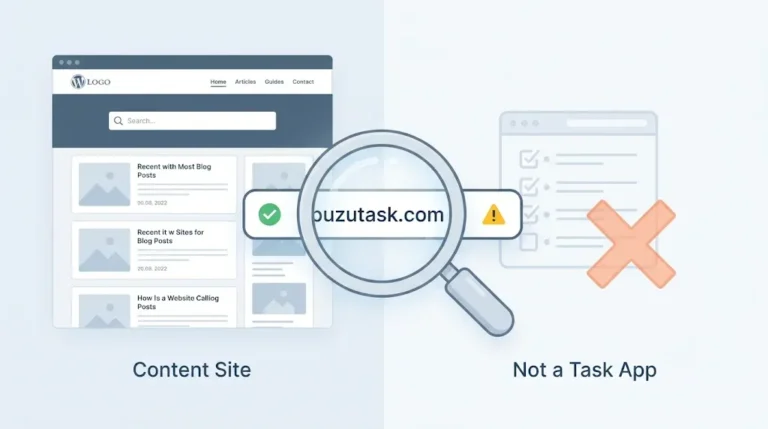
The most consistent description across independent reviews is simple: Zingyzon.com is an informational content website. It publishes free articles and guides, and readers do not need an account or subscription to access them. The topics cluster around home and garden, home improvement, kitchen appliances, smart living, and lifestyle advice. Textscodes, one of the more careful reviews, puts it plainly: it is “a free informational blog… not an online store or a service agency”.
The definition matters because so much of the confusion comes from people assuming the domain must be a store. It is not. There is no product inventory, no cart, and no checkout flow on the site itself. If you want to confirm the domain’s age and registration record for yourself, you can run the address through ICANN’s public WHOIS lookup. The record shows a registration date of 16 February 2024—useful context, but not proof of what the site does today.
2. Why You Are Seeing So Many Different Descriptions
The contradiction is real, and it has a paper trail. Scam-Detector describes Zingyzon.com as “an online platform that focuses on digital marketing services, particularly in search engine optimization (SEO) and Magento development”. Textscodes describes the same domain as a blog and explicitly says it “does not offer web development, software development, or professional services”. Both cannot be correct about the current site.
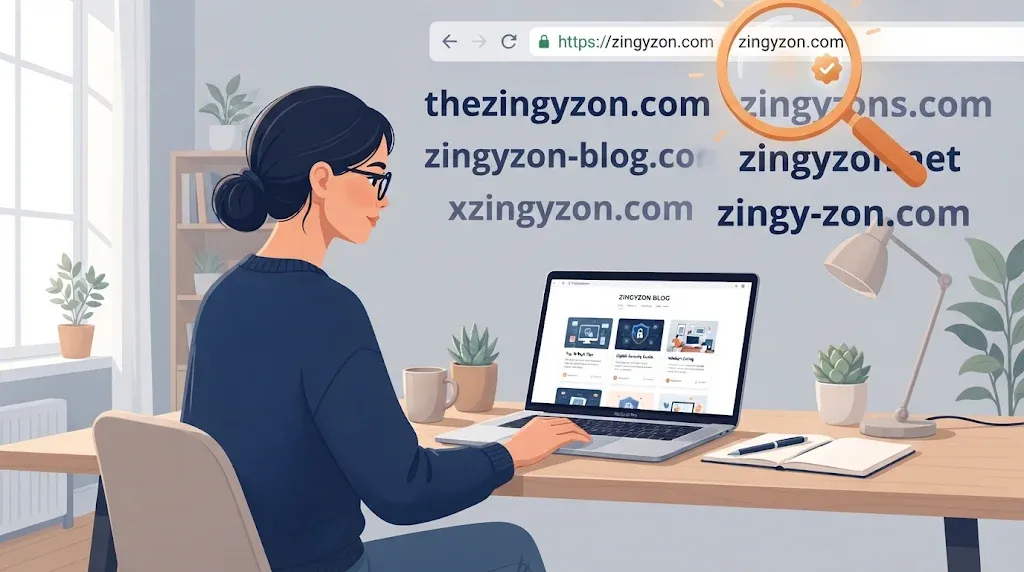
The likely explanation is that review sites copy each other, or describe a site from search snippets rather than its live pages. A marketing-style description can spread even when the site itself is just a blog. Domain confusion makes it worse. Thezingyzon.com, zingyzon.com.au, and zingyzons.com are different addresses with different apparent purposes—and similar names prove nothing about shared ownership. The lesson: trust the live site and consistent reviewers over any single outlier claim.
3. How to Verify What Zingyzon.com Is Right Now
You do not need to be a researcher to check this yourself. Run these five steps in order, and you will have a clearer picture than most reviews provide.
- Open the homepage and look for a cart icon or “Add to cart” button. If neither exists, it is not a direct store.
- Check the About and Contact pages for a registered business name. A blog name is not the same as a legal entity.
- Run the domain through ICANN’s WHOIS lookup to see the registration date and registrar—not the owner’s identity, which is often redacted.
- Search for independent reviews published in 2026 and compare at least three. If they disagree, note which ones actually quote the site’s pages.
- Check lookalike domains before you trust a link. The address bar is the only reliable way to know which site you are on.
4. Is Zingyzon.com Safe? What the Trust Signals Show
Safety and legitimacy are not the same question. A site can be safe to read and still not be a verified merchant. The table below separates common claims from what the available evidence actually shows, based on checks published in 2026.
| Claim you may see | What the evidence shows (2026) |
|---|---|
| “It is an online store.” | No cart or checkout found by multiple reviewers; Opera News calls it “a content blog, not a store”. |
| “It is an SEO and Magento agency.” | One review says so, but the same description is contradicted by another review and does not match the live site’s articles. |
| “It has a trust score.” | Scam-Detector gives it 68/100 and labels it “medium” risk—not blacklisted, but not strongly verified either. |
| “It has a real owner.” | The WHOIS record lists a registrant name and a Lahore, Pakistan address, but the organization field is redacted. |
| “It is new.” | The domain was registered in February 2024, though some reviews describe the current content format as launching in early 2026. |
These signals do not prove fraud. They also do not confirm that the site is a registered business with a customer-support phone line. A valid HTTPS certificate only protects data in transit; it does not verify that a merchant will deliver a product.
5. What We Do Not Know About Zingyzon.com
Here is the honest gap. We do not know who legally operates Zingyzon.com, whether it has a registered corporate entity in any jurisdiction, how it earns revenue, or whether its affiliate relationships are disclosed on every article. No public record reviewed for this article confirms a company registration tied to the domain. The WHOIS registrant name is visible, but that is not the same as a verified business identity. Absence of evidence is not proof of wrongdoing—but it does mean you should treat product recommendations on the site as editorial suggestions, not as vetted endorsements. If the site changes ownership or content strategy, the picture could shift again.
6. A Real-World Scenario: What Happens If You Try to “Shop” There
Imagine you see “Zingyzon” in a search result for a kitchen appliance and assume it is a retailer. You click through and land on an article. The article recommends a product and links to a third-party marketplace. You click the link, land on that marketplace, and complete the purchase there—not on Zingyzon. That is the normal flow. The site functions as a publisher, not a seller. The risk appears when a lookalike domain uses the name “Zingyzon” to ask for a card number directly. The FTC’s guidance on online shopping scams is blunt: before paying an unfamiliar site, confirm a physical address, a working phone number, and a refund policy. If those are missing, close the tab.
Key Takeaways
- Zingyzon.com is a content blog, not a store. No cart, no checkout, no direct product sales were found in 2026 reviews.
- Reviews disagree because they copy each other or describe lookalike domains. Trust the live site and the most consistent sources.
- The domain is relatively new (registered 2024), and business registration is unconfirmed. That is a caution flag, not a conviction.
- You can verify the basics in five minutes using the site’s own pages and a WHOIS lookup.
- Never enter payment details on a site that claims to be a Zingyzon store unless you can independently confirm the merchant’s identity.
FAQ
Is Zingyzon.com a real online store?
No. Multiple 2026 reviews found no cart, no checkout, and no products for sale on the domain. It publishes articles and links to third-party marketplaces, but it does not process transactions itself. If a different site using a similar name asks for payment, treat it as a separate and unverified merchant.
Is Zingyzon.com a scam?
There is no confirmed scam report tied to the exact domain in the sources reviewed. Scam-Detector rates it “medium” risk rather than high risk, and no blacklist engine flags it. But “not confirmed as a scam” is not the same as “verified as safe.” The trust signals are thin.
Who owns Zingyzon.com?
The public WHOIS record lists a registrant name and a Lahore, Pakistan address, but the organization field is redacted. No corporate registration in the United States or Australia was confirmed by the reviews checked. The domain uses a global .com extension, which does not by itself establish a physical business location.
Why do some websites call Zingyzon an SEO agency?
One review site describes it that way, but that description is contradicted by another review and does not match the live site’s articles. Review sites often rewrite each other or pull descriptions from old search snippets. The blog description is more consistent with what the site actually publishes.
Is it safe to click links on Zingyzon.com?
Reading articles is low risk. Clicking affiliate links carries the same risk as clicking any third-party link: you leave the original site and land on a merchant you have not vetted. Check the destination URL in your address bar before entering any personal or payment information.
Does Zingyzon.com sell products directly?
No evidence of direct sales was found. The site appears to earn through content and product recommendations that link to external retailers. If you want to buy a recommended item, complete the purchase on a marketplace you already trust, not on a lookalike page.
Conclusion
The honest answer to “What is Zingyzon.com?” is narrower than most reviews admit: it is a content blog with a confusing public footprint, not a store and not a confirmed agency. That does not make it dangerous—it makes it a site to read with normal caution. Use the verification steps above, ignore the lookalike domains, and treat every product link as a recommendation rather than a guarantee. If the site’s ownership or business model becomes clearer in the future, the evidence will change with it. Until then, the safest position is informed skepticism, not fear.
You Also Like To Read: Okfrut in 2026: The Updated Guide to Flavors, Zero-Sugar Cans, and What’s Actually in the Bottle