What Is Barbeglue Sarom? The Heat-Resistant Adhesive Behind Concrete BBQs
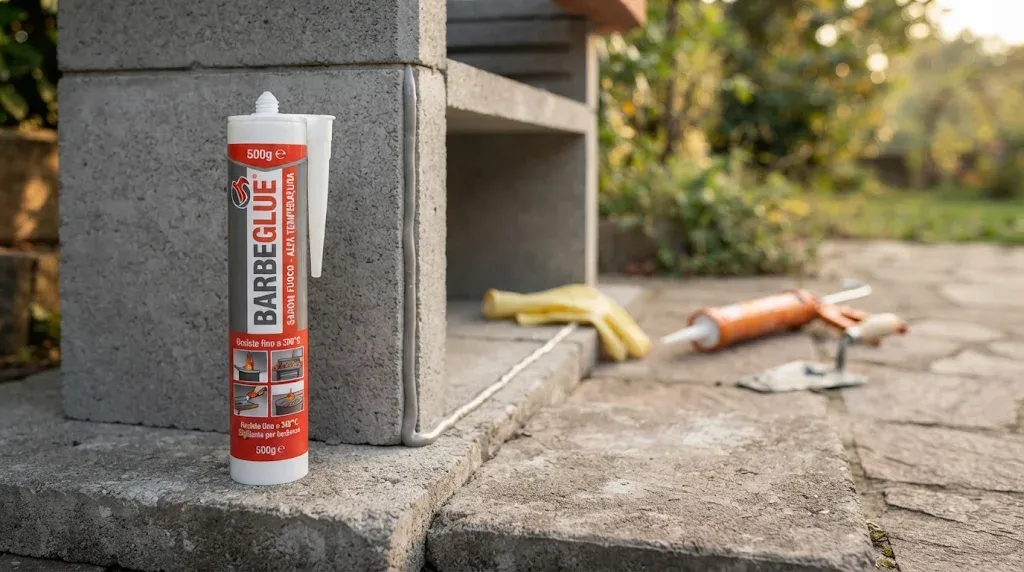
If you searched for Barbeglue and landed on pages about prostate spacers or hepatitis medication, you’re not alone. The name is shared by at least three unrelated products, and the one most homeowners actually want is a silicone adhesive from the Italian brand Sarom Fuoco. This guide cuts through that confusion. You’ll learn what the product is, which barbecues it’s made for, how many tubes to buy, and where the safety advice is still thin.
Barbeglue isn’t a mystery substance or a medical device. It’s a one-part adhesive sold to assemble concrete and metal outdoor cooking structures. But the retail listings leave gaps, and the name is genuinely ambiguous. Here’s the practical picture, with the confidence level the evidence supports.
Quick overview
- Barbeglue is a heat-resistant silicone adhesive, not a drug or supplement.
- Sarom Fuoco sells it for assembling concrete and metal barbecue parts.
- A standard tube is 500 g (270–290 ml) and costs about €19.90 in 2026.
- Most residential BBQs need one to two tubes; large models can need more.
- Ingredient disclosure is limited, so ventilation and skin protection matter.
Barbeglue Sarom, in plain terms
Barbeglue Sarom is a one-part silicone adhesive and sealant marketed for outdoor cooking structures. Retail listings describe it as flexible, heat-resistant, and suitable for bonding concrete or metal components of a barbecue. It is not a structural mortar, and it is not a food-contact coating. Think of it as the elastic glue that holds prefabricated concrete slabs, firebox panels, and metal trim together while absorbing expansion and contraction.
The product belongs to the Sarom Fuoco range, a brand that has supplied DIY and mass-market retailers since 1990. French and Italian listings from 2025 and 2026 consistently describe the same use case: assembling concrete BBQ kits. You’ll also see the name written as “Speciale Barbeglue” or “Colle speciale Barbeglue.” Those are the same product under different listing titles.
What it’s used for — and what it isn’t
The main job is joining concrete or metal barbecue parts. Retailer Q&A sessions from 2025 and 2026 show buyers using it on Sarom models such as Luxor, Zara, and Prometeo. The adhesive also appears in fireplace assembly instructions, where it bonds individual stone or concrete sections.
It is not a replacement for oven-safe mortar inside the firebox, and it shouldn’t be used to seal cooking surfaces. The safety data sheet for a product sold as “ISOCOLL ECO 6056 BARBEGLUE” lists trimethoxyvinylsilane, a silane that the EU chemicals agency describes as used in adhesives and sealants ECHA substance page for trimethoxyvinylsilane. That tells you what class of chemistry you’re handling, not how much is in the tube.
How many tubes will you actually need?
Retailer answers give a practical range. For a Sarom Zara or similar mid-size masonry BBQ, Eurobrico staff confirmed in June 2025 that one to two tubes cover the shelf and hood. A larger Luxor model measuring 159 × 72 × 161.5 cm needed two tubes, according to an April 2026 answer. The tube weight is 500 g, and the listed price in 2026 is €19.90.
Buy one tube first, dry-fit your parts, and count the joints. Wide or porous concrete seams drink more adhesive than clean metal flanges. If you’re assembling a full outdoor kitchen with multiple modules, budget two to three tubes and keep the receipt.
How Barbeglue compares (Historical)
The only direct community comparison comes from a 2012 Slovenian forum thread, so treat it as historical rather than current test data. The poster couldn’t find Barbeglue locally and used a two-component epoxy instead. That anecdote still illustrates the trade-off.
| Product type | Heat resistance | Flexibility | Gap-filling | Cure behavior | Best for |
|---|---|---|---|---|---|
| Barbeglue (Sarom) | Marketed as heat-resistant; exact °C not published in retail listings | Flexible | Moderate | One-part, moisture-cure silicone | Concrete/metal BBQ kits |
| Generic construction silicone | Often 150–200 °C depending on grade | Flexible | Low to moderate | One-part | Indoor sealing, not high-heat |
| Two-component epoxy | High, but rigid | Rigid | Low | Mix and cure | Metal repairs, not expansion joints |
The temperature figures for generic silicones are typical ranges from manufacturer datasheets, not a Sarom claim. Barbeglue’s own continuous temperature limit is one of the data gaps discussed below.
How to use Barbeglue Sarom
- Dry-fit every panel and mark the joints before opening the tube.
- Clean dust and grease from concrete and metal with a dry brush or degreaser.
- Cut the nozzle to a bead width that matches the joint, usually 6–10 mm.
- Apply a continuous bead to one surface, press the parts together, and hold or tape until the adhesive grabs.
- Wipe excess immediately with a dry cloth; cured silicone is harder to remove.
- Let the assembly sit undisturbed for the cure time on the tube, then follow the BBQ maker’s first-fire instructions.
- Work outdoors or in a ventilated space, and wear nitrile gloves if you’re handling multiple tubes.
Safety, gaps, and what we don’t know
This is where confidence drops. Sarom’s own product page did not appear in the top search results, and the retail descriptions don’t publish a full technical datasheet. The ingredient picture comes from a third-party safety data sheet that names trimethoxyvinylsilane. The EU chemicals agency has no harmonised classification and labelling for that substance, which means the regulatory picture is still developing.
What we don’t know: the exact continuous temperature rating of Barbeglue, whether the formulation has changed since the 2012 forum era, and whether the 500 g tube and the 290 ml tube contain the same solids content. We also don’t know if every “Barbeglue” listing is manufactured by Sarom or if some are white-label versions. Treat marketplace titles as descriptions, not specifications.
For the broader cooking side, Yale Environmental Health & Safety recommends keeping grills well away from structures and never leaving them unattended Yale EHS safe grilling guide. Adhesive safety and grill safety are separate issues, but both matter when you build and fire a concrete BBQ.
Buying Barbeglue Sarom in 2026
Current listings cluster around Italian and French DIY retailers. Eurobrico lists the 500 g tube at €19.90 with 24–48 hour shipping. ManoMano shows the same product with customer reviews from 2025 and 2026. Bricomarché and Bricorama sell a full mounting kit that includes Barbeglue, white render, and a sponge roller. The kit price is around €49.90 in France.
Check three things before you buy: the tube weight (500 g vs 290 ml), the brand name “Sarom Fuoco,” and whether the listing is the adhesive alone or a kit. If you only need to re-stick one loose panel, a single tube is enough. If you’re building from scratch, compare the kit price against buying adhesive and render separately.
Key Takeaways
- Barbeglue Sarom is a heat-resistant silicone adhesive for concrete and metal BBQ assembly, not a medical product.
- Retail listings from 2025–2026 put a 500 g tube at about €19.90 and suggest one to two tubes for a typical masonry BBQ.
- The only direct comparison to epoxy comes from a 2012 forum post, so it’s historical context, not fresh test data.
- The safety data sheet names trimethoxyvinylsilane, and the EU has no harmonised classification for it — ventilate and protect your skin.
- Buy by weight and brand name, not by the word “Barbeglue” alone, because listings mix adhesive-only and full kits.
FAQ
Is Barbeglue the same as Barrigel?
No. Barrigel is a rectal spacer made from hyaluronic acid used in prostate cancer treatment. Barbeglue is a silicone adhesive for barbecues. The names look similar in search results, but they are unrelated products from different industries.
How many tubes of Barbeglue do I need for a Sarom barbecue?
For a mid-size model like Zara, one to two 500 g tubes are usually enough. A larger Luxor model needed two tubes according to a 2026 retailer answer. Dry-fit first and count your joints before ordering.
Is Barbeglue heat resistant enough for a wood-fired BBQ?
Retail listings market it as heat-resistant for barbecue assembly. However, Sarom does not publish a continuous temperature rating in the top search results. Keep the adhesive on the outer joints, not inside the firebox, and follow the BBQ maker’s instructions.
Can I use Barbeglue on a metal barbecue?
Yes, listings say it bonds metal as well as concrete. Clean and degrease metal first. For high-heat metal repairs near the fire, a rigid high-temperature epoxy may be more appropriate than a flexible silicone.
Where can I buy Barbeglue Sarom?
It’s sold by Italian and French DIY retailers such as Eurobrico, ManoMano, Bricomarché, and Bricorama. Prices in 2026 are around €19.90 for a 500 g tube, or about €49.90 for a full mounting kit.
Does Barbeglue have a safety data sheet?
A third-party SDS for “ISOCOLL ECO 6056 BARBEGLUE” lists trimethoxyvinylsilane. Sarom’s own current SDS was not in the top search results. Ask the retailer for the latest sheet if you need workplace or allergy documentation.
Conclusion
Barbeglue Sarom solves a narrow problem well: it holds prefabricated concrete and metal BBQ parts together while flexing with heat. It is not a mystery substance, and it is not a medical product. The honest limits are the missing temperature rating and the thin ingredient disclosure. Buy the right tube count, work ventilated, and keep the adhesive on the structure — not the cooking surface.
You Also Like To Read: The Sheetz Menu in 2026: New Items, Prices, and How to Order Like a Pro