Introduction
Your floorboards creak. Your chairs scrape. Your feet get cold in winter. And somewhere in the background, noise bounces off hard surfaces. What if one simple material could soften all of that—without adding plastic to your home?
That material already exists. Wollmatten—the German word for wool felt mats—have been used for generations in Europe for exactly these problems. Today, they’re gaining attention from homeowners, renters, and crafters who want natural solutions that actually work.
In this guide, you’ll learn what Wollmatten are, how they perform compared to synthetic alternatives, where to use them, and how to pick the right ones for your space. No jargon. No hype. Just practical information you can use.
Quick Overview: Wollmatten at a Glance
- What they are: Dense mats made from pressed sheep’s wool fibres, often needle-punched without glues or binders.
- Core strengths: Thermal insulation, acoustic absorption, impact cushioning, and moisture regulation.
- Common uses: Carpet underlay, furniture pads, wall panels, garden plant protection, and craft projects.
- Eco-profile: Renewable, biodegradable, and often free from formaldehyde and VOCs.
- Maintenance: Easy to vacuum or spot-clean; keep dry and protect from moths in storage.
What Are Wollmatten? A Simple Definition
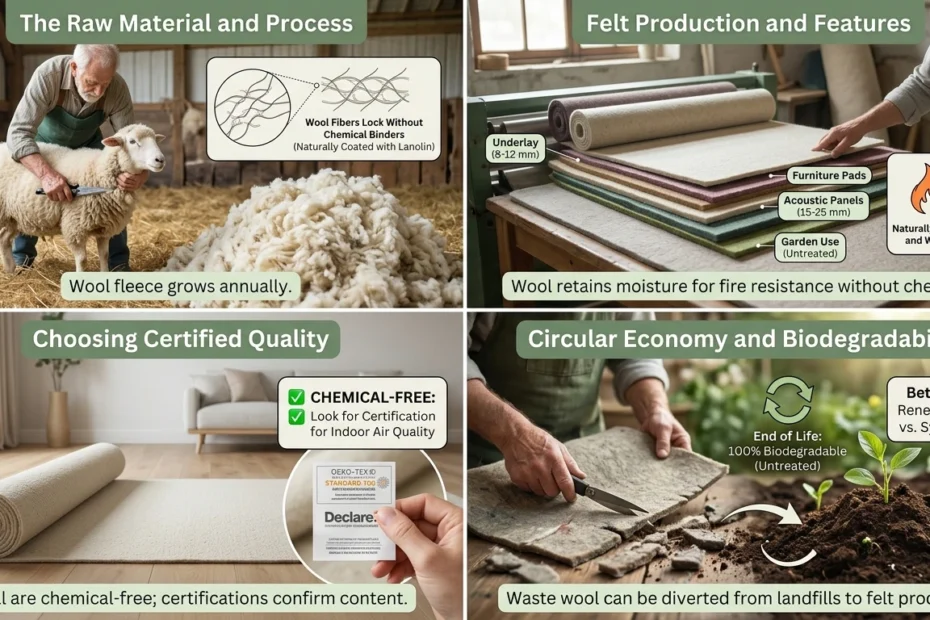
Wollmatten are thick, non-woven mats made by felting sheep’s wool fibres together. The fibres interlock mechanically—usually through needle punching—so no chemical adhesives are needed. The result is a durable, breathable material that traps air and absorbs sound.
Think of felt without the plastic. Conventional craft felt is often made from polyester or acrylic. Wollmatten start with raw wool, which is washed, carded, and pressed into a dense sheet. The natural crimp of the wool fibres gives the mat its springiness and resilience.
Because the fibres are randomly entangled, wool felt mats don’t fray easily. You can cut them with scissors or a utility knife, and they hold their shape. That makes them friendly for DIY projects, from custom rug pads to acoustic panels.
Why Wool Felt Mats Excel at Insulation and Soundproofing
Wool is a natural insulator for one main reason: air. Each wool fibre is crimped and overlapping, creating millions of tiny pockets. Those pockets slow down heat transfer and disrupt sound waves. The denser the felt, the more effective it becomes at blocking noise and retaining warmth.
According to researchers at Deakin University’s Institute for Frontier Materials, wool’s unique fibre structure gives it inherent thermal and acoustic insulation properties. Their work with automotive insulation found that prepared wool felt had similar sound absorption and thermal resistance to synthetic textile options—while also being naturally odour-resistant and flame retardant.
How Wool Felt Works (in Plain Terms)
- Sound hits the mat. The porous surface lets air pass through, but the tangled fibres create friction.
- Friction converts sound energy into tiny amounts of heat. Mid-to-high frequencies—footsteps, voices, clattering dishes—are absorbed rather than reflected.
- Heat struggles to pass through. Still air trapped in the fibres acts as a barrier, slowing thermal transfer through floors, walls, or ceilings.
A thick wool felt underlay won’t make a drum kit silent. But it will take the edge off impact noise and make a room feel calmer. For thermal comfort, a wool mat under a rug or carpet reduces the chill that radiates from cold subfloors.
7 Practical Uses for Wollmatten Around Your Home
Wool felt mats are not a single-purpose product. Here are the most common ways people use them, from floors to gardens.
- Carpet and rug underlay. A wool felt pad adds cushioning, extends the life of your carpet, and reduces impact sound. It also smooths out minor subfloor imperfections.
- Furniture and floor protection. Cut small felt pads for chair legs, table feet, and decorative objects. Wool felt is dense enough to prevent scratches and durable enough to last for years.
- Acoustic wall panels. Wool felt sheets can be mounted on walls or ceilings to reduce echo in open-plan rooms, home offices, and studios.
- Garden winter protection. Wrap potted plants or lay mats around tree bases to insulate roots from frost. The breathable fibres let soil breathe while holding warmth.
- Weed suppression. In garden beds, wool felt mats block light without sealing the soil. They gradually biodegrade and add organic matter to the earth.
- Craft and needle-felting bases. The dense, firm surface protects worktables and provides a stable base for needle-felting projects.
- Pet mats and crate liners. Wool regulates temperature and absorbs moisture, making it a comfortable natural option for animal bedding.
Real-world example: A homeowner in a 1970s apartment used 10 mm wool felt underlay beneath a large area rug in the living room. The rug no longer slid on the hardwood floor, footsteps from the room above became noticeably softer, and the floor felt warmer underfoot in winter—all without installing wall-to-wall carpet.
Wollmatten vs. Synthetic Felt: A Side-by-Side Comparison
| Feature | Wool Felt Mats | Synthetic Felt (Polyester/PP) |
|---|---|---|
| Raw material | Renewable sheep’s wool | Petroleum-based |
| Breathability | High—wool regulates moisture | Low to moderate |
| Biodegradability | Yes, in soil (untreated wool) | No—persists for decades |
| Flame resistance | Naturally flame-retardant due to wool’s moisture retention and nitrogen content | Often requires chemical additives |
| Sound absorption | Good, especially mid-to-high frequencies | Variable; denser synthetics can perform well |
| Moisture handling | Absorbs and releases vapour without feeling wet | Can trap moisture and odour |
| Moth risk | Yes, if stored dirty and damp | No |
| Typical cost | Higher upfront | Lower upfront |
The trade-off is clear. Wool felt mats cost more per square metre than basic synthetic felt. But they offer breathability, natural fire behaviour, and end-of-life biodegradability that plastics can’t match. For spaces where indoor air quality and material honesty matter, the premium is often worth it.
Sustainability and Indoor Air Quality: The Hidden Benefits
Many synthetic foams and felts are treated with flame retardants, adhesives, or anti-static agents. These can off-gas volatile organic compounds (VOCs) into your home. Wool felt mats typically avoid this problem because wool fibres bond mechanically—no glue required.
The Healthy Materials Lab notes that sheep’s wool contains lanolin, a natural waxy coating that makes fibres water- and soil-resistant. Wool also retains moisture inside each fibre, which helps it resist flame without chemical treatment. At the end of its life, untreated wool felt can be 100% biodegradable.
That doesn’t mean every Wollmatte on the market is chemical-free. Some manufacturers add mothproofing agents or dyes. If indoor air quality is a priority, look for Oeko-Tex Standard 100 certification or a Declare label. These certifications tell you what’s in the product and what’s been left out.
From a circular-economy perspective, wool is a renewable resource. Sheep grow fleece annually, and lower-grade or waste wool can be diverted from landfill into felt production. That’s a better story than extracting fresh oil to make another roll of synthetic underlay.
How to Choose and Care for Wool Felt Mats
Not all Wollmatten are created equal. Thickness, density, and fibre source vary widely, and those differences affect performance and price.
For underlay: Choose 8–12 mm thickness for carpet cushioning and sound reduction. Felt that’s too thin won’t absorb impact; felt that’s too thick can make carpet installation difficult.
For furniture pads: Self-adhesive felt dots and strips are convenient, but plain felt cut to size often lasts longer. Check that the felt is dense, not fluffy—loose fibres compress quickly.
For acoustic panels: Thicker felt (15–25 mm) performs better at lower frequencies. Mount panels with a small air gap behind them to improve absorption.
For gardens: Untreated, undyed wool felt is best. Avoid mats with synthetic backing if you want the material to biodegrade in soil.
Care tips: Vacuum wool felt regularly with a brush attachment. Blot spills with a damp cloth—don’t soak the mat. Dry it flat away from direct heat. Store clean, dry mats in a breathable cotton bag with cedar blocks or lavender sachets to deter moths.
Common Misconceptions About Wollmatten
“Wool felt is itchy.” Not usually. Needle-punched wool felt has a dense, smooth surface. The coarse, scratchy fibres are on the inside of the mat, not the outer face.
“Wool felt is fragile.” Wool felt is actually tough. The interlocking fibres resist tearing and compression. Quality underlay can last for decades under normal foot traffic.
“Wool felt attracts moths.” Moths are a risk if the felt is stored dirty or damp. Clean mats stored dry are far less vulnerable. Mothproofed versions are available if you live in a high-risk area.
“Wool felt is only for floors.” As the uses above show, Wollmatten work on walls, in gardens, in cars, and in craft rooms. The material is versatile by design.
Key Takeaways
- Wollmatten are pressed wool felt mats used for insulation, sound absorption, cushioning, and protection—without synthetic binders.
- Wool’s fibre structure traps air, giving it natural thermal and acoustic properties that rival synthetic materials.
- They work under carpets, on walls, in gardens, and under furniture, making them a multi-room solution.
- Untreated wool felt is biodegradable and low in VOCs, but certifications help confirm what’s actually in the product.
- Care matters: keep mats dry, vacuum regularly, and store with moth deterrents to maximise lifespan.
FAQ
What are Wollmatten used for?
Wollmatten are used as carpet underlay, furniture pads, acoustic panels, garden frost protection, weed barriers, craft bases, and pet mats. Their dense wool felt structure provides insulation, cushioning, and sound absorption in homes, gardens, and workshops.
Are wool felt mats good for soundproofing?
Yes, for impact noise and mid-to-high frequencies. Wool felt absorbs sound energy through friction in its fibrous structure. It won’t block bass or loud machinery completely, but it noticeably reduces footsteps, echo, and everyday clatter when used as underlay or wall panels.
Do wool felt mats attract moths?
Only if they’re stored dirty, damp, or in dark spaces for long periods. Clean, dry wool felt is low-risk. For extra protection, use mothproofed felt or store mats with cedar, lavender, or other natural deterrents.
Can wool felt mats be used with underfloor heating?
Yes, wool felt is compatible with underfloor heating. Wool allows moisture vapour to pass through, and its insulation slows heat loss without blocking it entirely. Use a moderate thickness—very thick mats can reduce heating efficiency.
Are Wollmatten eco-friendly?
Untreated wool felt is renewable, biodegradable, and often free from formaldehyde and VOCs. Look for Oeko-Tex or Declare certifications to confirm low chemical content. Synthetic backing or moth treatments can reduce biodegradability, so check the label.
How thick should wool felt underlay be?
For residential carpet, 8–12 mm is a practical range. Thinner mats (3–5 mm) suit furniture pads and craft use. Thicker mats (15–25 mm) work better for acoustic panels and heavy impact noise.
Conclusion
Wollmatten solve everyday problems quietly. They soften footsteps, warm cold floors, protect furniture, and absorb the echo that makes a room feel harsh. They do it with a material that grows back, breaks down, and doesn’t need a chemistry set to manufacture.
If you’re tired of plastic underlays and sticky foam pads, start small. Try a wool felt pad under a squeaky chair. Lay a mat beneath a rug. Notice the difference. Natural materials don’t have to be complicated—sometimes they’re just felt.
You Also Like To Read: BlessingTide.com USA: A Practical Guide for Safe, Smart Shopping