You’ve probably seen the word tracqueur in a product listing, an insurance form, or a message from a friend whose bike just vanished. It sounds technical. The idea is simple: a small device that tells you where something is.
This guide covers what’s actually new in 2026 — which models are leading independent tests, what the CNIL changed in June, and why the cheapest tracker on the shelf is often the one that fails when you need it most. You’ll finish knowing exactly which type fits your situation, what it will really cost, and where the legal line sits.
Quick Overview: Tracqueur Essentials for 2026
- Tracqueur is the French spelling of “tracker” — a GPS or Bluetooth locating device.
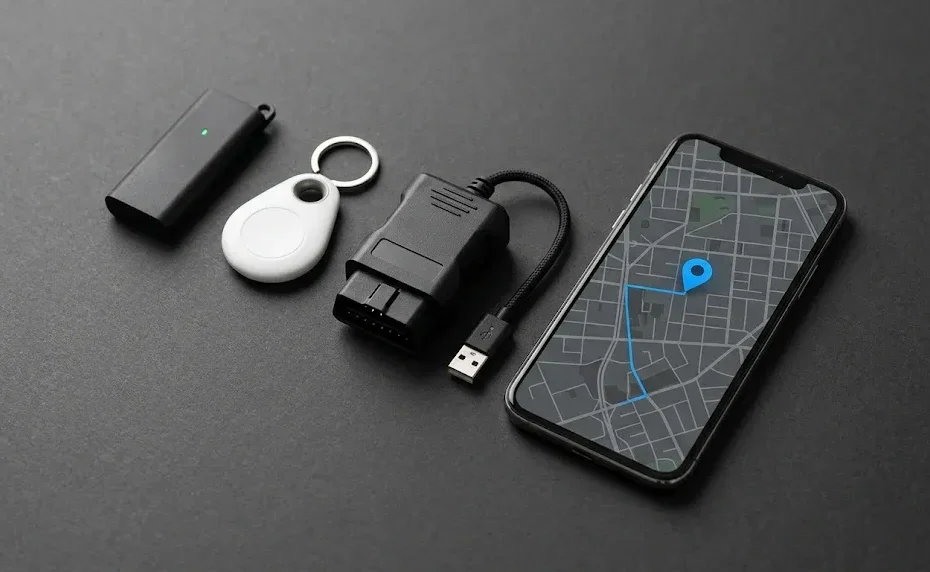
- Three families dominate: GPS-SIM trackers, Bluetooth tags, and OBD-II plug-ins.
- Invoxia Classic (2026 Edition) and Onntrack Portable Pro+ lead independent GPS tests this year.
- AirTag, Galaxy SmartTag 2, and Pebblebee Clip 5 are the standout Bluetooth options for 2026.
- French law allows tracking your own property; tracking a person without consent carries up to one year in prison and a €45,000 fine.
- The CNIL’s June 2026 guidance classifies vehicle location data as “highly personal” and requires consent unless the service is expressly requested.
What Exactly Is a Tracqueur?
A tracqueur is any compact device that reports the location of an object or a person. In everyday French it covers everything from a €20 Bluetooth tag to a hardwired fleet unit. The word itself tells you nothing about how the device works.
The decisive difference is how it finds and transmits its position. A true GPS tracker receives satellite signals and pushes coordinates over a mobile network. A Bluetooth tag does neither — it broadcasts a short-range signal that nearby smartphones relay to the cloud. That gap shapes price, battery life, accuracy, and whether you’ll actually recover a stolen item.
If you’re buying in 2026, look for a SIM slot or a subscription requirement on the box. That’s the fastest way to tell a real GPS tracqueur from a crowd-sourced Bluetooth finder.
The Three Types of Tracqueurs That Matter in 2026
Independent testing this year has made the differences sharper than ever. Futura Sciences tested ten GPS models in urban and rural conditions in August 2026, while Car and Driver and Yahoo Autos put the leading car trackers through real-world recovery scenarios. The pattern is consistent.
| Feature | GPS-SIM Tracqueur | Bluetooth Tag | OBD-II Plug-in |
|---|---|---|---|
| How it locates | Satellites + cellular network | Nearby phones in a crowd network | Vehicle’s OBD port + GPS |
| 2026 standouts | Invoxia Classic (2026), Onntrack Portable Pro+, Salind 11 4G | AirTag (2nd Gen), Galaxy SmartTag 2, Pebblebee Clip 5 | Bouncie, Tracki |
| Upfront cost | €50–€170 | €25–€45 | €20–€90 |
| Monthly fee | €4.45–€7.95/month, or annual plans | None | Usually required for live data |
| Battery / power | 90 days to 6 months | 6–12 months (replaceable or rechargeable) | Draws from car battery |
| Real-time tracking | Yes, independent | Only when phones are nearby | Yes, while ignition is on |
| Weakness | Subscription cost, charging | Fails in remote areas | Obvious, stops reporting when car is off |
The practical rule hasn’t changed: if you need independent, remote tracking — a stolen car in an underground car park, a trailer in a field — only a GPS-SIM unit does the job. If you want to find a misplaced bag at a train station, a Bluetooth tag is cheaper and simpler.
How Does a GPS Tracqueur Actually Work?
A GPS tracqueur performs three steps, repeatedly.
- Listen to satellites. The GPS chip receives timing signals from orbiting satellites and calculates latitude and longitude.
- Transmit coordinates. An embedded SIM sends that location over 4G or LTE-M to a cloud server. No cellular coverage means the device knows where it is but can’t tell you.
- Push to your phone. The server relays the position to your app, where you see a pin, a trip history, or a movement alert.
This is why subscription fees exist: the SIM consumes data daily. Bluetooth tags skip steps 1 and 2 entirely. They wait for a passing smartphone to “hear” them and report the sighting anonymously. That’s why an AirTag costs nothing per month but goes silent in a field with no iPhone users around.
The 2026 twist is LTE-M, a low-power cellular standard now used by Invoxia’s Pro Max and several competitors. It delivers longer battery life than classic 4G while maintaining independent reporting — the best of both worlds, at a higher upfront price.
Is It Legal to Use a Tracqueur in France?
Yes — with one bright red line. French law allows you to track your own property without special authorisation. Installing a GPS tracqueur on your own car, motorcycle, van, or trailer is legal, and many insurers now expect policyholders to keep such a device active as a condition of theft coverage.
The line is crossed when the device captures the location of a person without their consent. Article 226-1 of the French Penal Code punishes the intentional transmission of a person’s real-time or delayed location without their agreement with up to one year in prison and a €45,000 fine. That provision has been used against stalkers and against employers who secretly tracked employees’ personal vehicles.
The rule is simple: track the object, not the person. If another human will be driving or carrying the tracked item and hasn’t agreed to it, you’re in dangerous territory.
Tracqueur vs. AirTag: Which One Do You Actually Need?
This is the question most buyers face in 2026, and the answer depends on what “recovery” means to you.
An AirTag or Galaxy SmartTag 2 is a proximity finder. It’s brilliant for a lost suitcase at a busy station because thousands of phones pass through every hour, each one silently relaying the tag’s position. Golem’s February 2026 comparison confirmed Apple’s crowd network remains the largest, with Samsung’s SmartTag 2 the best choice for Galaxy users. But put that same tag in a stolen car parked in a quiet industrial zone, and it may never be detected.
A GPS tracqueur is an independent reporter. It talks to satellites and cell towers directly, so it can report from a forest lay-by, a container yard, or a border road — anywhere with mobile coverage. The trade-off is cost and maintenance: you’ll pay a subscription and remember to charge the battery.
A real-world example from 2026 testing: Car and Driver found the Bouncie OBD tracker excellent for teen-driver monitoring and trip logging, but it only reports while the ignition is on. A thief who disconnects the OBD port cuts the feed instantly. That’s why a hidden battery-powered GPS unit remains the only serious choice for theft recovery.
Definition Box: Tracqueur Data
A tracqueur’s location log can reveal when you leave home, where you work, which doctor you visit, and who you spend weekends with. The CNIL’s June 2026 guidance calls this “highly personal” data. Treat the app account like a bank account: strong password, two-factor authentication, and minimal sharing.
What Changed in French Privacy Law in 2026?
The CNIL published new recommendations in June 2026 specifically for location data from connected vehicles. According to the legal analysis of the guidance, the regulator now treats this data as capable of revealing sensitive information — habits, home address, places of worship, health-related visits — and calls for heightened vigilance.
The core rule is unchanged but now explicitly enforced: access to location data stored in a vehicle requires prior consent under the ePrivacy directive, transposed into Article 82 of the French Data Protection Act. The CNIL grants an exemption only when the processing is strictly necessary for a service the user has expressly requested — vehicle rental, theft tracking, breakdown assistance, or voluntary navigation.
Crucially, the exemption collapses if the service is imposed automatically and inseparably in a contract. If a rental company or seller bundles location tracking without giving the customer a genuine choice, consent becomes mandatory again. For private owners, the practical takeaway is to choose a provider that encrypts location data, allows trip-history deletion, and doesn’t resell anonymised movement patterns without explicit opt-in.
How to Choose the Right Tracqueur for Your Needs
Use this checklist before you buy.
- Define what you’re protecting. A car, a pet, a child, a laptop bag, and a motorcycle each demand a different form factor and battery strategy.
- Decide whether you need live, independent tracking. If yes, choose a GPS-SIM device. If “last seen near a phone” is enough, a Bluetooth tag saves money.
- Check the subscription terms before checkout. Invoxia’s Classic renews at €29.95/year or €49.90 for two years; the Pro Max at €59.95/year. Onntrack’s Portable Pro+ is sold around €170 with no recurring fee at all.
- Verify battery claims against independent tests. Futura Sciences’ August 2026 testing found the Invoxia Classic delivers its claimed six months in normal use, while the Pro Max matches that figure despite LTE-M connectivity.
- Look for movement alerts and geofencing. Without them, you’ll only discover a theft when you check the app. This is the single feature that separates a passive dot on a map from a security tool.
- Check water and tamper ratings. A bike or outdoor trailer tracker needs at least IP65; a car unit hidden under the chassis should be fully sealed. Invoxia’s 2026 range is IP67 across the board.
Tracqueurs for Pets and Everyday Objects in 2026
Pet tracking has become one of the strongest use cases. CNET’s September 2026 testing named the Tractive Dog 6 the best overall GPS pet tracker for accurate tracking and an easy-to-use app, while PCMag highlighted the Fi Smart Dog Collar Series 3+ for health tracking and the Halo Collar 4 for virtual fencing on large properties.
For cats and small dogs, the calculus differs: a bulky GPS unit can be uncomfortable. Consumer Reports’ November 2026 roundup found the Tractive GPS Dog LTE emerged with the best overall score among five trackers tested, but noted the battery doesn’t last as long as some rivals.
For luggage, keys, and wallets, Bluetooth tags remain the sensible choice. ZDNET’s 2026 roundup named the Pebblebee Clip 5 a strong AirTag alternative — it works with both Apple Find My and Google Find Hub, offers up to 12 months of battery, and is rechargeable via USB-C. The Chipolo POP is the value pick at around $29 with a replaceable battery.
Key Takeaways
- A tracqueur covers GPS units, Bluetooth tags, and OBD dongles — the technology inside decides what it can actually do.
- GPS-SIM trackers are the only reliable choice for independent theft recovery; Bluetooth tags depend on nearby phones.
- Invoxia Classic (2026), Onntrack Portable Pro+, and Salind 11 4G lead this year’s independent GPS tests.
- Tracking your own property in France is legal; tracking a person without consent is a criminal offence under Article 226-1.
- The CNIL’s June 2026 guidance tightens consent rules for vehicle location data — choose a provider that respects minimisation and deletion.
FAQ
Is a tracqueur legal in France for my own car?
Yes. Installing a GPS tracker on a vehicle you own is legal, and no police or state permission is required. If someone else drives the car, their consent matters — but for your own use, the device is lawful. The offence is tracking a person, not protecting your property.
Do I need a subscription for a GPS tracqueur?
Most true GPS trackers require a monthly or annual plan because they need a SIM card and cellular data to transmit locations. Invoxia’s 2026 range includes one year of subscription, then renews at €29.95–€59.95 per year. Some models, like the Onntrack Portable Pro+, are sold with no recurring fee at all. Bluetooth tags like AirTag and Pebblebee have no subscription but depend on crowd networks.
How accurate is a tracqueur in 2026?
A modern GPS tracqueur typically reports within 3–5 metres in open conditions. Accuracy drops near tall buildings, tunnels, or dense tree cover. Bluetooth tags are far less precise — they show a general area, not a pinpoint. Golem’s 2026 comparison notes that AirTag’s ultra-wideband precision finding works within about 30 metres, beyond which crowd-sourcing takes over.
Can a thief detect and remove a tracqueur?
Yes. A determined thief can use a radio-frequency scanner to detect a transmitting GPS tracker, or simply search the vehicle. That’s why concealment matters, and why a backup battery-powered unit in a second location improves your odds. OBD plug-in trackers are the easiest to defeat — unplugging them cuts the feed instantly.
What’s the difference between a tracqueur and an AirTag?
A tracqueur (GPS tracker) calculates its own position via satellites and reports it over cellular networks. An AirTag is a Bluetooth tag that relies on nearby Apple devices to relay its location anonymously. The tracqueur works independently anywhere with mobile coverage; the AirTag works only where people with phones are present, but costs nothing per month.
Can I use a tracqueur to track my pet?
Yes, pet tracking is one of the most common uses. CNET’s 2026 testing named the Tractive Dog 6 the best overall GPS pet tracker. Choose a lightweight waterproof model with a secure collar mount, and avoid bulky vehicle trackers — they can be uncomfortable for small animals and may snag on branches.
Conclusion
A tracqueur is not a magic shield against theft, loss, or worry. It’s a tool — and its value depends on matching it to the job. If you need independent recovery capability, a GPS-SIM unit with movement alerts is the only serious option in 2026. If you just want to find a misplaced bag, a Bluetooth tag will do the job for a fraction of the cost.
The 2026 market rewards buyers who look past the box and ask three questions: Does it work without my phone nearby? What does it cost me every month? And whose location am I actually collecting? Answer those honestly, and you’ll choose a device you can trust when it matters.
You Also Like To Read: Instanavigation in 2026: How It Works, What Changed, and What You Need to Know