TL;DR: Rosboxar is a modular tech framework that lets teams connect tools, automate workflows, and scale operations without rebuilding their entire stack. In 2026, it’s being adopted across logistics, SaaS, healthcare, and marketing—with implementation timelines of 4–16 weeks and AI integration built in from the start.
You’ve seen the pattern: one tool gets added to fix a workflow, then another, and suddenly nobody on the team knows how everything connects anymore. That exact frustration—documented in startup threads and operations meetings—is the problem Rosboxar was designed to solve.
This guide covers the newest 2026 updates, what the platform actually does, who it fits, and what to expect if you’re evaluating it right now. No jargon, no recycled definitions—just the current picture.
Quick Overview: Rosboxar at a Glance (2026 Edition)
- What it is: A modular system framework—not a single app or vendor-locked product.
- Core mechanic: Independent modules connected through a shared, API-driven integration layer.
- 2026 status: The definition has stabilized; adoption timelines are clearer; AI integration is now a native capability, not an add-on.
- Typical implementation: 4 to 16 weeks, depending on existing stack complexity.
- Strongest use cases: Logistics, SaaS, healthcare operations, manufacturing, and marketing.
- Who it’s for: Beginners seeking clarity, general readers following the trend, and professionals designing change-ready systems.
What Is Rosboxar—and Why Is It Everywhere in 2026?
Definition: Rosboxar is a modular framework for building and running digital operations as separate, interchangeable components rather than one rigid platform.
Think of the difference between a wall and a bookshelf. A wall is built once; change it and you tear into the structure. A bookshelf is assembled from pieces—add a section, swap a shelf, rebuild one part without touching the rest. That’s the operating logic behind the platform.
The term didn’t arrive as a shrink-wrapped product from one company. It evolved through engineering communities and frustration with legacy software that couldn’t keep pace with how modern teams actually work. In 2026, the conversation has shifted from “what is it?” to “how do teams actually use it?”—which is exactly where the next sections go.
How the Rosboxar Modular System Works (2026 Breakdown)
The architecture is simple in principle and powerful in practice. Here’s the how-it-works breakdown:
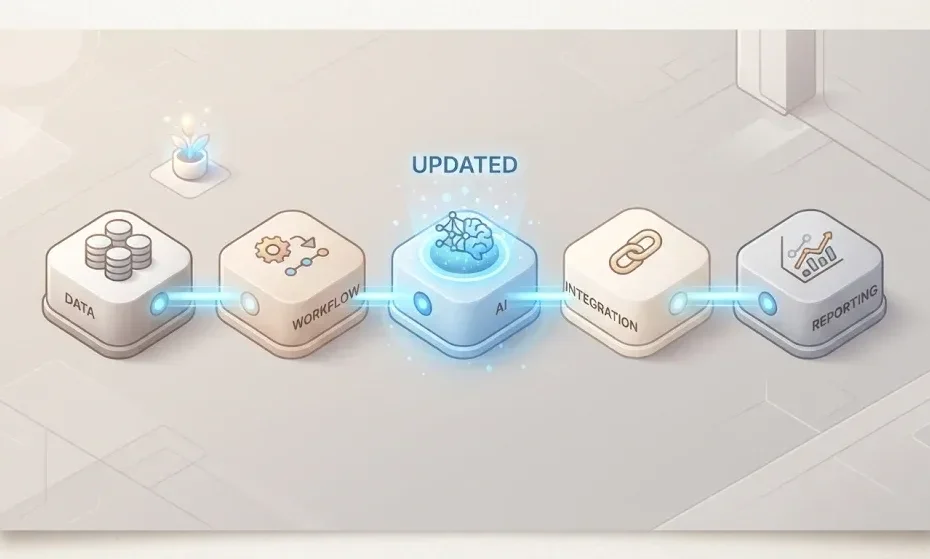
- Each function becomes a module. Data processing, workflow automation, AI decision-making, and third-party integrations each live in their own independent unit.
- Modules communicate through a shared integration layer. An API-driven structure means every module connects to your existing tools without custom development work each time.
- When something changes, you update the relevant module. A new tool, a new process, a new team—change one piece and leave everything else running.
That last point is the structural advantage. According to research from MIT on modular software architectures, modular, information-hiding designs enable the addition of new features and the correction of defects without widespread changes to the rest of the system.
Rosboxar vs. Traditional Monolithic Platforms: The 2026 Comparison
The question isn’t which is “better” in every case. It’s which structure matches how your organization actually changes.
| Dimension | Rosboxar (Modular) | Traditional Monolithic Platform |
|---|---|---|
| Change process | Update one module; the rest keeps running | Rebuild or re-integrate the whole system |
| Scalability | New modules activate as needed | Growth often forces a platform migration |
| Integration | Shared, API-driven layer | Custom development per connection |
| Risk of change | Contained to the module being changed | Spreads across the entire system |
| Fit for fast-growing teams | High—absorbs expansion without breaking | Lower—built for a snapshot in time |
Modular design operates on the principle of creating with repeatable, interchangeable units that allow for diverse outcomes without redesigning the entire structure when requirements shift. For teams that expect to change—which is most teams in 2026—that structural difference compounds over time.
Real-World Rosboxar Examples: Where It Fits in 2026
The platform’s use cases cluster around operational complexity: environments where many tools, teams, and workflows must coexist without collapsing into chaos.
Logistics: A fulfillment team connects route planning, inventory tracking, and customer notifications as separate modules. When a new carrier is added, only the carrier-integration module changes. According to documented 2025 case studies, a retail business implementing the framework for inventory management reduced stock shortages by 30 percent through real-time tracking and automated alerts.
SaaS: Billing, onboarding, analytics, and support live in separate modules. A pricing experiment updates the billing module; the onboarding flow and analytics pipeline remain untouched.
Marketing: Campaign automation, CRM syncing, and reporting are modularized. A new ad platform is connected through the integration layer rather than a one-off custom build.
Healthcare and manufacturing: Operational modules handle scheduling, compliance tracking, and equipment monitoring without forcing a full-system overhaul when one regulation or process changes.
What Are the Newest Rosboxar Updates in 2026?
The 2026 conversation has moved past definitions and into practical adoption. Three updates matter most right now:
1. AI Integration Is Native, Not Bolted On
Rosboxar’s modular structure treats AI decision-making as a first-class module rather than an afterthought. That means teams can add or swap AI capabilities without rebuilding workflows around them. Industry analysis in 2026 confirms AI integration is now a native capability of the platform layer, alongside cloud-based flexibility and real-time processing.
2. Low-Code Modular Layer for Non-Developers
A newer development is the low-code modular platform layer, which allows operations managers, product leads, and business analysts to build and modify workflows without a developer needing to be involved in every change. This is a meaningful shift: it moves modular system design from an engineering-only activity to an operational capability.
3. Implementation Timelines Are Now Benchmarked
Earlier discussions treated implementation as open-ended. In 2026, the range has stabilized at 4 to 16 weeks, depending on how complex the existing stack already is. That gives evaluation teams a concrete planning input instead of a vague promise.
Key Takeaways
- Rosboxar is a modular system framework, not a single app—its power is structural, not feature-based.
- Independent modules connect through a shared API-driven layer, so one change doesn’t break the whole stack.
- 2026 updates center on native AI integration, low-code workflow modification, and benchmarked implementation timelines.
- The strongest fit is operational complexity: logistics, SaaS, healthcare, manufacturing, and marketing.
- Typical adoption takes 4–16 weeks, with the low end for well-documented stacks and the high end for layered legacy environments.
FAQ: Rosboxar Questions People Are Searching in 2026
What is Rosboxar in simple terms?
Rosboxar is a way of building digital operations from separate, interchangeable modules instead of one large, rigid platform. Each module handles a specific function and connects to the others through a shared integration layer. When something changes, you update the relevant module and leave the rest running.
Is Rosboxar a software product or a design approach?
Both interpretations exist. Some teams treat it as a deployable platform; others treat it as a design philosophy for modular architecture. The core principles—modularity, adaptability, composability, and integration-first thinking—remain consistent across both views.
How long does Rosboxar take to implement in 2026?
Most teams implement it in 4 to 16 weeks, depending on existing stack complexity. Teams with simpler, well-documented systems trend toward the shorter end; teams untangling years of layered tools trend toward the longer end.
Who is Rosboxar for?
It’s most useful for growing teams whose digital operations have become fragmented across too many disconnected tools. Logistics, SaaS, healthcare, manufacturing, and marketing are among the most commonly cited use cases.
Does Rosboxar replace my existing tools?
Not necessarily. The approach is integration-first: existing tools can be connected through the shared integration layer rather than replaced wholesale. The goal is structural coherence, not a forced rip-and-replace.
Why is Rosboxar gaining attention in 2026?
Because more teams are hitting the limits of stacked, monolithic systems. The term has moved from niche engineering discussions into broader business guides, and the 2026 conversation focuses on practical adoption timelines, native AI integration, and low-code workflow modification.
Conclusion
Rosboxar isn’t a magic fix for every operational problem. It’s a structural answer to a structural question: what if your systems were built to change, instead of built to last exactly as they are today? For teams tired of adding tools to fix tools, that shift in thinking is the real value.
The next time your stack feels like it’s held together with tape and hope, ask a simpler question: which part actually needs to change—and why should everything else have to change with it?
You Also Like To Read: Kinervus in 2026: The Complete Guide to the Belgian Clinic and the Wellness Buzzword