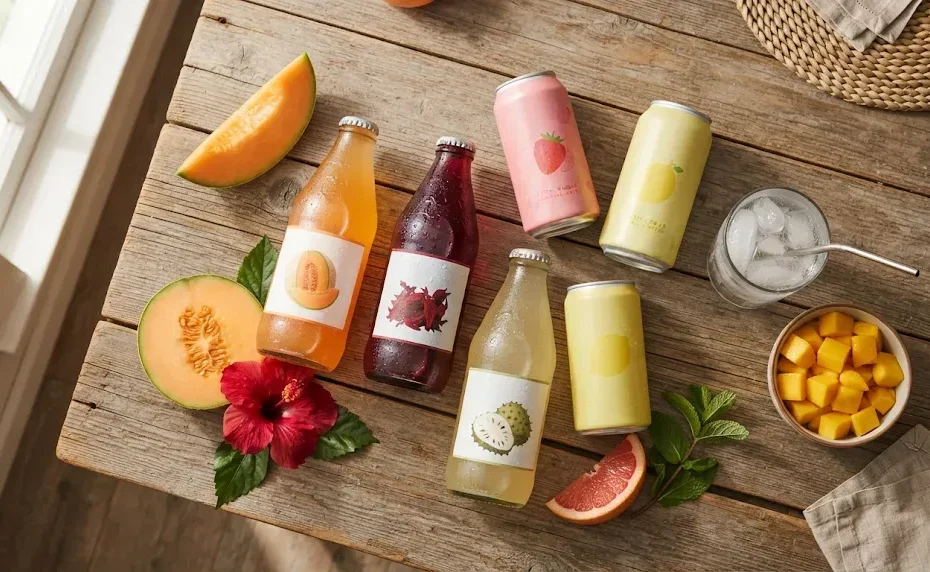
TL;DR: Okfrut is a U.S.-registered fruit-drink brand from Whole Fruit JPC (San Antonio, Texas). It now spans classic bottled fruit waters, nectars, and a newer zero-sugar sparkling line in strawberry and lemon. Sugar still ranges widely — from 11g in soursop to 33g in hibiscus — so the label in your hand remains the final authority.
Introduction
If you searched for okfrut and found three different answers — a tropical superfruit, a productivity app, and a movie site — you’re not alone. The brand’s short, unusual name has attracted a thick layer of content-farm noise. But the real product has a paper trail: a U.S. trademark, USDA nutrition records, and retail listings that you can actually verify.
Here’s what’s changed since the early bottles. Okfrut is no longer just a bottled agua fresca-style drink. Recent retail catalogues show a zero-sugar sparkling water line in strawberry and lemon, alongside the older bottled flavors. There’s also a documented tamarind variety. If you’re trying to figure out whether the bottle in your hand is a light fruit water or a sugar-heavy nectar, the gap between flavors is wider than most people expect.
This guide gives you the updated picture: who makes it, what flavors exist now, how the sugar numbers actually break down, and how to choose a bottle that fits your habits. No myths, no miracle claims.
Quick Overview
- What it is: A fruit-flavored beverage brand owned by Whole Fruit JPC, a Texas-based company with manufacturing ties to SEPIM in Jalisco, Mexico.
- Core bottled flavors: Cantaloupe, grapefruit, pineapple, hibiscus, mango, apple, guava, soursop.
- Newer documented varieties: Tamarind (bottled) and zero-sugar sparkling strawberry/lemon cans.
- Sugar range: Roughly 11g to 33g per bottle, depending on flavor and bottle size.
- Biggest label trap: Bottle sizes vary (16 fl oz vs. 20 fl oz), so sugar comparisons only work when you check the serving size.
- Best lower-sugar picks: Soursop and the lighter fruit-water styles.
What Is Okfrut — and Who Makes It?
Okfrut is a fruit-flavored beverage line in the style of aguas frescas, the sweet fruit waters sold at taquerias and paleterias across Mexico and Central America. The bottled version is designed to be the shelf-stable, grab-from-the-cooler equivalent of a fresh agua de melón.
The corporate side matters more than most pages admit. A U.S. trademark filing dated September 16, 2014 identifies Whole Fruit JPC as the owner of the OKFRUT mark, registered for “fruit flavored beverages.” The filing lists October 2016 as first use in U.S. commerce. Whole Fruit JPC describes itself as an American beverage company with manufacturing expertise in Mexico; its corporate site names San Antonio, Texas, as its U.S. base and SEPIM, based in Jalisco, as a sister company involved in product development and manufacturing.
That structure explains the flavor DNA. The brand’s ingredient business includes pineapple concentrate, hibiscus extract, melon pulp, and limeade concentrate — the building blocks of traditional aguas frescas. The U.S. version of the brand is roughly a decade old, even if the recipes draw on older Mexican fruit-water traditions.
Why the search results are still a mess
Short brand names are magnets for low-effort pages. These sites publish on any keyword with traffic and fill the gaps with invented details — “tropical superfruit,” “mitochondrial support,” “clinical studies.” The giveaway is that none of them cite a label, a trademark record, or a USDA entry. The real product shows up in nutrition databases and grocery listings with barcodes and ingredient lists you can verify. If a page about Okfrut mentions “detox” or “superfruit,” close the tab.
The Updated Flavor Lineup (Bottled + Sparkling)
The lineup now splits into three broad categories: classic fruit waters, thicker nectars, and the newer sparkling zero-sugar cans. Here’s the current documented picture.
| Flavor | Spanish Name | Style | Bottle Size | Key Note |
|---|---|---|---|---|
| Cantaloupe melon | Melón | Fruit drink water | 16 fl oz / 20 fl oz | Classic agua fresca profile; sweet |
| Grapefruit | Toronja | Fruit drink water | 16 fl oz | Tart, slightly bitter, refreshing |
| Pineapple | Piña | Fruit drink water | 20 fl oz | Bright, tropical, crowd-pleasing |
| Hibiscus | Jamaica | Fruit drink water | 20 fl oz | Tart, floral; highest sugar in the bottled range |
| Mango | Mango | Fruit drink water | Varies | Rich and sweet; popular with kids |
| Apple | Manzana | Fruit drink water | Varies | Light and familiar |
| Guava | Guayaba | Nectar (16% juice) | Varies | Thicker texture, more juice content |
| Soursop | Guanábana | From concentrate | Varies | Creamy, tropical; lowest sugar in the range |
| Tamarind | Tamarindo | Fruit drink water | Varies | Tangy, caramel-like; a newer documented variety |
| Strawberry / Lemon | Fresa / Limón | Zero-sugar sparkling water | Cans | Retail listings at Walmart; different product type |
The zero-sugar sparkling line is the biggest update. It’s a different product from the bottled fruit waters — fizzy, canned, and formulated without sugar. If you’re looking for a lighter option, that’s the sub-line to check first. The tamarind bottled variety is also worth noting: it brings a tangy, slightly caramel-like profile that’s common in Mexican aguas frescas but less familiar to many U.S. shoppers.
For a first bottled pick, jamaica remains the flavor that converts people who find melon drinks too syrupy. For a lower-sugar bottled option, soursop is the standout. And if you’ve never had soursop, the guanábana version is a low-effort introduction — fresh soursop is hard to find in many U.S. stores.
Okfrut Nutrition: The Real Numbers (and the Label Trap)
This is where most articles get vague. Okfrut isn’t one product with one nutrition profile. It’s a brand spanning multiple bottle sizes, formulations, and even product types. The numbers swing widely — and comparing them without checking serving size creates false impressions.
Here’s what the USDA-linked records and public nutrition databases show for the bottled line:
| Flavor | Serving Size | Calories | Total Sugars |
|---|---|---|---|
| Soursop | 1 bottle | 50 | 11g |
| Cantaloupe melon | 20 fl oz | 112 | 25g |
| Grapefruit (Toronja) | 16 fl oz (473ml) | 120 | 26g |
| Hibiscus (Jamaica) | 1 bottle | 150 | 33g |
| Grapefruit (alternate record) | 16 fl oz | 118 | 26g |
The grapefruit entry is a useful case study. A 16 fl oz serving has 120 calories, 26g of sugars, and 25mg of sodium, according to the USDA FoodData Central record for the grapefruit variety. That record also shows the product has more sugar per 100g than 59% of the 5,857 other drink products in USDA’s branded database. In other words: it’s not an extreme outlier, but it’s firmly in the sweetened-drink category.
The soursop version, by contrast, sits at 50 calories and 11g of sugar per bottle — roughly one-third the sugar of the hibiscus version. That gap is the single most important thing to understand about this brand. “Okfrut” on the label tells you almost nothing about the sugar inside. The flavor and the serving size tell you everything.
A note on data noise: Some crowdsourced nutrition pages list “0 calories” for certain Okfrut flavors. Those entries are almost certainly incomplete or mis-entered. The USDA-linked records and multiple independent databases show the bottled fruit waters are sweetened and calorific. Trust the package label over any single database entry — including this one.
Okfrut vs. Soda vs. Fresh Agua Fresca: An Honest Comparison
How does the bottled version actually stack up against the two alternatives most readers are weighing? The answer depends on which flavor you pick.
| Okfrut fruit water (bottled) | Regular soda (12 oz) | Homemade agua fresca | |
|---|---|---|---|
| Sugar | 11g–33g per bottle (varies by flavor) | ~39g | You control it |
| Calories | 50–150 per bottle | ~140 | Varies |
| Juice content | Low in “water” styles; 16% in guava nectar | 0% | Depends on recipe |
| Carbonation | Still (bottled line) | Carbonated | Still |
| Convenience | High — grab and go | High | Low — requires prep |
| Additives | Often includes sweeteners, acids, and stabilizers | Sweeteners, colors, acids | Minimal if made at home |
The lighter fruit waters (soursop, some cantaloupe formulations) land closer to a lightly sweetened iced tea. The sweeter end (hibiscus, some grapefruit records) is in soda territory. The zero-sugar sparkling cans are a different category entirely — they’re the closest thing in the Okfrut universe to a diet soda alternative.
If you’re watching sugar intake, the practical move is simple: pick by flavor and serving size, not by brand alone. A 20 fl oz melon bottle at 25g of sugar is a very different drink from a soursop bottle at 11g.
Is Okfrut Healthy? Separating the Name from the Nutrition
The okra confusion (still worth clearing up)
Part of the search confusion comes from the name sounding like okra, the green flowering plant that’s technically a fruit. Okra is genuinely nutrient-dense — high in fiber, vitamin K, and vitamin C, and linked in some research to modest improvements in lipid and blood sugar markers. But Okfrut is not okra. The drink brand doesn’t contain okra, and it doesn’t inherit okra’s nutritional profile. The similarity is a coincidence, not a health claim.
The sugar reality
The more relevant question is added sugar. The American Heart Association recommends limiting added sugars to about 25 grams per day for women and 36 grams for men. A single hibiscus bottle at 33g of sugar can account for most — or all — of that daily allowance.
That doesn’t make Okfrut “bad.” It makes it a sweetened beverage that deserves the same awareness you’d bring to a soda or a sweet tea. The zero-sugar sparkling line exists precisely because the brand recognizes that gap.
What about the “65 years” heritage claim?
The brand’s Facebook page says it has made fruit-based drinks for over 65 years. That’s the company’s own claim, and no independent history was found to confirm it. The verifiable U.S. timeline starts with the 2014 trademark filing and 2016 first commercial use. Treat the heritage claim as marketing context, not a documented fact.
How to Choose an Okfrut Bottle Without Overthinking It
You don’t need a spreadsheet. A few simple rules cover most situations.
1. Decide what you want the drink to do. If it’s a treat with a meal, the classic bottled flavors are fine. If it’s everyday hydration, the zero-sugar sparkling cans or the soursop bottle are the smarter starting points.
2. Check the bottle size before comparing sugar. A 20 fl oz bottle and a 16 fl oz bottle are not the same drink. The sugar-per-bottle number only means something when you know the volume.
3. Use the flavor as your sugar signal. In the bottled line, soursop is the lower-sugar outlier; hibiscus and some grapefruit formulations sit at the higher end. Cantaloupe and pineapple fall in between.
4. Treat nectars as dessert, not hydration. Guava nectar (16% juice) is thicker and more juice-forward — enjoyable, but not a lighter alternative to the fruit waters.
5. Don’t trust a single database entry. Nutrition records get updated, reformulated, and sometimes mis-entered. The package in your hand is the authority. If you want a verifiable reference point, the USDA FoodData Central record for the grapefruit variety is a useful starting place.
Key Takeaways
- Okfrut is a beverage brand, not a fruit. It’s owned by Whole Fruit JPC (San Antonio, Texas), with manufacturing ties to SEPIM in Jalisco, Mexico.
- The lineup has expanded. Beyond classic bottled fruit waters, there are documented tamarind and zero-sugar sparkling strawberry/lemon varieties.
- Sugar varies more than the brand name suggests. Soursop sits at 11g per bottle; hibiscus reaches 33g. Check the flavor and the bottle size.
- Bottle sizes differ. A 20 fl oz melon bottle and a 16 fl oz grapefruit bottle are not directly comparable without adjusting for volume.
- The zero-sugar cans are a separate product type. If you want a lighter option, look for the sparkling line, not the bottled fruit waters.
FAQ
Is Okfrut a real fruit?
No. Okfrut is a brand of fruit-flavored drinks. It is not a fruit, and it does not contain okra. The name is a trademark, not a botanical category.
Does Okfrut have a zero-sugar version?
Yes — recent retail listings show a zero-sugar sparkling water line in strawberry and lemon flavors. It’s a different product from the bottled fruit waters, so check the package for “zero sugar” and “sparkling” if that’s what you want.
How much sugar is in Okfrut?
It depends on the flavor and bottle size. Documented bottled varieties range from about 11g of sugar (soursop) to 33g (hibiscus). The 16 fl oz grapefruit version has 26g. Always check the specific label.
What’s the lowest-sugar Okfrut bottled flavor?
Among the documented bottled varieties, soursop (guanábana) is the lowest at roughly 11g of sugar and 50 calories per bottle.
What flavor should I try first?
If you like tart drinks, start with jamaica (hibiscus). If you want a lower-sugar bottled option, choose soursop. If you want something fizzy and lighter, look for the zero-sugar sparkling cans.
Where can I buy Okfrut?
It’s sold mostly in Hispanic grocery stores and larger chains in the U.S., with retail listings at stores like Walmart and H-E-B. Availability varies by region and by product type.
Conclusion
The Okfrut story in 2026 is more interesting than the myths. It’s not a miracle fruit, and it’s not a single product. It’s a Texas-based beverage brand with Mexican manufacturing roots, a classic bottled fruit-water line, and a newer zero-sugar sparkling experiment. The sugar gap between flavors is the real story: soursop and hibiscus are not the same drink, even if they share a logo.
If you want to rank this page and keep it ranked, the advantage is freshness plus verifiability. Link to the USDA record, cite the trademark timeline, and show the per-flavor numbers. That’s what the content farms can’t fake — and what readers and AI engines reward.
You Also Like To Read: Al-Kântara: The Arabic Word for “Bridge” That’s Reshaping Heritage Debates in 2026