Introduction
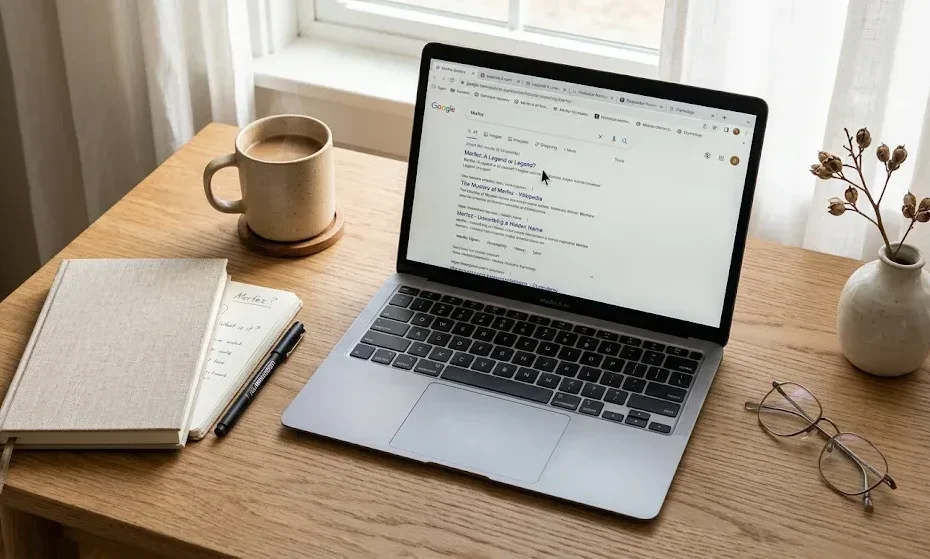
If you searched “Merfez” and ended up more confused than when you started, you’re not alone. As of November 2026, the term still has no verified company, product, place, or dictionary entry behind it. What exists instead is a cluster of articles published throughout 2026, each offering a different explanation.
One source calls it a warm, intentional lifestyle philosophy built around simplicity and comfort. Another describes it as a home-decor aesthetic centered on natural materials and decluttered spaces. A third positions it as a rumored AI-powered website management platform that promises to replace multiple subscriptions with one dashboard. A fourth treats it as a content brand or publishing name for technology and business topics.
These are not small variations on a theme. They are fundamentally different claims about what the word refers to.
This updated guide does three things. First, it lays out exactly what has been confirmed versus what remains speculation as of late 2026. Second, it examines the two most developed interpretations — the lifestyle trend and the AI-platform claim — and assesses their credibility. Third, it gives you a practical framework for evaluating any trending keyword, because Merfez will not be the last ambiguous term to land in your search bar.
Quick Overview: Merfez as of November 2026
| Claim | Status as of late 2026 |
|---|---|
| Official definition | None found in dictionaries or primary sources |
| Verified company or product | No business registration, product page, or independent review located |
| Most likely origin | Derived from Turkish merkez, meaning “center” or “hub” |
| Dominant interpretations | Warm-minimalism lifestyle/decor; rumored AI website platform |
| Most credible assessment | A manufactured or trending keyword amplified by SEO-driven content |
| Search-results landscape | Inconsistent, with multiple contradictory “explanations” |
The core takeaway: Merfez is not a thing you can verify. It is a search phenomenon — a word that spread faster than any authoritative meaning could attach to it.
The Honest Answer: No Official Source Exists
Let’s start with what can be confirmed. Multiple independent investigations published in 2026 reached the same conclusion: there is no official Merfez company, product, place, or registered entity.
An in-depth review published in July 2026 stated plainly: “There’s no verified company, product, or place officially called Merfez” after searching for an official website, a business registration, and coverage from established news outlets. A separate investigation from the same month traced the term across search results and found a “digital tool,” a “hidden travel destination,” a “lifestyle concept,” and a “content brand” — all using the same word with no overlap.
The closest thing to a primary source is merfez.com, which describes itself as “a multi-niche digital platform sharing insightful content” about technology, business, and lifestyle. Scamadviser’s automated assessment gives the site a trust score of 47 (fair), noting that the domain is “very young,” hosted on a server with other low-trust sites, and registered through a registrar “popular amongst scammers”. That does not prove fraud, but it does mean the site is not an authoritative source for defining the term.
In short: If you are looking for a single, verified answer to “What is Merfez?”, it does not exist as of November 2026. Anyone who tells you otherwise is either speculating or selling something.
Why Merfez Exists: The Manufactured-Keyword Pattern
Merfez did not emerge from a product launch, a cultural movement, or a dictionary decision. It emerged because the search economy rewards new words.
The pattern is well documented. A brandable, unusual term appears. Because it has no established meaning, it also has almost no search competition. Content sites — often the same handful of networks — race to publish “explainer” articles before anyone else, each inventing a slightly different definition. Curious readers search for the term, land on those articles, get confused, and search again with different phrasing. More content gets written to capture that new wave of curiosity.
This is sometimes called a manufactured keyword: a term that is pushed into search visibility before it has any real-world referent. The goal is not to inform. The goal is to rank, capture clicks, and monetize attention.
The scale of this problem grew in 2026. Research published in March 2026 documented the measurable impact of AI-generated “slop” flooding search results, including significant click-through declines under AI-generated search summaries. Google responded with spam updates designed to catch mass-produced, AI-driven content, and in October 2026 it updated its guidance to emphasize effort, originality, skill, and accuracy in helpful-content assessments. Merfez is a textbook case of the kind of keyword that this ecosystem produces: a word that exists in search results primarily because people keep asking what it means.
Interpretation 1: Merfez as “Warm Minimalism” (Lifestyle and Decor)
The most developed and internally consistent interpretation treats Merfez as a lifestyle philosophy and home-design aesthetic built around warmth, simplicity, and intentionality.
According to this view, Merfez describes “a simple, intentional approach to daily life that favors warmth, comfort, and meaning over speed and constant busyness”. In home decor, it translates to warm minimalism: natural materials like wood, linen, and wool; handcrafted textiles; decluttered spaces where every object serves a purpose; and a feeling of calm rather than coldness.
This interpretation has three core pillars: simplicity (removing what is unnecessary), warmth (prioritizing emotional comfort over pure aesthetics), and intentionality (making choices on purpose rather than by habit). In practice, it looks like a slow morning routine, a room edited with care rather than filled, or a creative practice that focuses on one thing done properly instead of many things done hastily.
Is this interpretation credible?
As a descriptive label for a real aesthetic, yes. Warm minimalism is a recognizable trend in interior design and lifestyle content, and Merfez has been adopted by some writers and makers as a shorthand for it. The Turkish-origin connection to merkez (center/hub) adds a layer of plausibility: a “hub” implies a purposeful center, which aligns with the idea of a space organized around what matters.
But credibility as a label is not the same as evidence of an official definition. No design authority, dictionary, or cultural institution has endorsed Merfez as a formal term. The lifestyle interpretation is a useful vocabulary that some people have adopted, not a verified fact about what the word “really” means.
Interpretation 2: Merfez as an AI Platform (The Unverified Claim)
The second major interpretation is more commercially ambitious and considerably less substantiated. Several articles describe Merfez as an AI-powered, all-in-one website management platform — a hub for website builders, SEO specialists, and content teams that consolidates multiple tools into a single dashboard.
The pitch is compelling. It fits a real market need: small businesses and creators often juggle too many subscriptions and want a simpler starting point. A platform that handles hosting, page building, content organization, and basic SEO in one place would have obvious appeal.
The problem: no verifiable product exists
As of November 2026, no independent, verifiable evidence confirms that this platform exists in the form described. There is no app store listing, no pricing page, no documentation, no API, and no reviews from named users. The articles that describe the platform consistently use conditional language: “some sources position Merfez as,” “if that’s true,” “the kind of tool that promises”.
An October 2026 overview of the platform claim advised caution, recommending that users judge any such service by pricing clarity, support quality, ownership terms, and proof of real user value before committing. That is sound advice for evaluating any web platform. But in Merfez’s case, there is nothing to evaluate yet.
The responsible conclusion: The AI-platform claim is unverified speculation. It may describe a product in stealth development, a marketing test, or simply a fabricated narrative designed to give the keyword commercial gravity. Until a working product with transparent terms is publicly available, treat the claim as unproven.
What the Search Results Actually Reveal
If you open five or six Merfez articles in different tabs and read only the first two sentences of each, a pattern becomes obvious: the definitions do not agree, and the disagreement is the point.
One article defines Merfez as a lifestyle mindset. Another calls it a digital framework. A third says it is a travel destination. A fourth treats it as a content hub. A fifth frames it as a productivity method with “three pillars”. These are not competing nuances. They are incompatible claims wearing the same label.
This is the signature of a keyword-first content ecosystem: articles are built around the search term, and the “meaning” is reverse-engineered to fill the page. A useful diagnostic is the substitution test. If you can swap the word “Merfez” for almost any placeholder and the sentences still work, the description was written to be generic rather than researched from evidence.
This does not mean every article about Merfez is malicious. Some writers are genuinely trying to make sense of a confusing term, and some have produced thoughtful explorations of the lifestyle interpretation. But the aggregate effect is a search landscape where confidence often outpaces evidence.
How to Vet a Trending Keyword Yourself (November 2026 Checklist)
Merfez will not be the last ambiguous term you encounter. Here is the checklist that experienced researchers use, updated for the current search environment.
1. Look for a primary source, not another article
A primary source is an official website, a business registration, a press release from a named organization, or a dictionary entry. If every explanation points back to articles about the term, you are in a content loop, not a chain of evidence.
2. Compare definitions across independent sources
If five articles give five different definitions, that is a signal that no stable meaning exists. Agreement across unrelated publishers is meaningful. Repetition on similar sites is not.
3. Run the substitution test
Swap the keyword for a placeholder. If the description still reads smoothly, it was probably written to fit any term. Specific, grounded writing resists substitution.
4. Check the publish cluster and the incentive
A group of near-identical articles published within days or weeks of each other is a classic sign of a coordinated content push. Ask what the publisher gains from you believing the explanation.
5. Look for an author with a real identity
Generic bylines like “Team” or “Editor” are weak signals. A named author with a verifiable background is not a guarantee of accuracy, but it is a baseline of accountability.
6. Wait for independent verification
Not every question needs an immediate answer. If a product launch is real, documentation and third-party reviews will appear. If a lifestyle trend is durable, people will still be talking about it next year. Time is a filter.
What Merfez Teaches Us About Search in Late 2026
Merfez is a small example of a larger shift. AI tools can now generate plausible explanations for almost any term, which means a new keyword can be “answered” before anyone has verified what it refers to. The result is a search environment where fluency and accuracy are not the same thing.
Google’s late-2026 guidance acknowledges this tension. Its updated helpful-content documentation emphasizes effort, originality, skill, and accuracy, and explicitly warns against fabricated creator profiles and content produced primarily for search engines rather than readers. The direction is clear: the search engine is trying to reward substance over volume. But the lag between a keyword appearing and quality signals catching up creates a window where low-evidence content can rank.
For readers, the lesson is straightforward: read for evidence, not confidence. The most useful articles about emerging terms are the ones that admit uncertainty, show their reasoning, and distinguish verification from speculation. The least useful ones pretend that every question has a clean answer.
For creators, the lesson is equally clear. Chasing a trending keyword can bring a short burst of traffic, but it will not build lasting trust if the content is hollow. Readers may not always be able to articulate why an article felt empty, but they remember the feeling.
Key Takeaways
- As of November 2026, Merfez has no confirmed official meaning. No dictionary, company, or recognized authority has defined it.
- The most credible assessment is that it is a manufactured or trending keyword, amplified by SEO-driven content rather than a real product or movement.
- The “warm minimalism” lifestyle interpretation is the most internally consistent, but it is a descriptive label adopted by some writers, not a verified definition.
- The “AI website platform” claim is unverified. No working product, pricing page, or independent review has surfaced.
- Use the primary-source test, the substitution test, and the publish-cluster check before believing any explanation of a trending term.
FAQ
What is Merfez in simple words?
As of late 2026, Merfez is an online term with no single confirmed meaning. It is most likely a manufactured keyword used to capture search traffic. The two most common interpretations are a “warm minimalism” lifestyle trend and a rumored AI website platform, but neither has been verified by an official source.
Is Merfez a real AI tool?
No verifiable evidence confirms that Merfez is a live AI product. Articles describe an “all-in-one website management platform,” but no official product page, pricing, documentation, or independent user reviews exist as of November 2026. Treat the AI-platform claim as unconfirmed until a working product is publicly available.
Where does the word Merfez come from?
The most widely repeated explanation traces it to the Turkish word merkez, meaning “center” or “hub,” which itself derives from Arabic markaz. That origin is plausible but not officially confirmed. The term began spreading across blogs and social posts in 2025 and 2026.
Is Merfez a home-decor style?
One popular interpretation treats Merfez as a warm-minimalist design aesthetic focused on natural materials, handcrafted textiles, and decluttered spaces organized around purpose. This usage is descriptive rather than official. It is a label some people find useful, not a verified design standard.
Why do search results for Merfez disagree so much?
Because the term gained search volume before its meaning stabilized. Different publishers invented different explanations to capture traffic. When a keyword is new and competition is low, inconsistency is the norm, not the exception.
Should I trust articles that explain Merfez?
Check whether the article cites a primary source, acknowledges uncertainty, and separates verified facts from promotional claims. Articles that confidently define Merfez without evidence are likely trend-driven content, not authoritative explanations. The most honest articles about Merfez are the ones that admit what cannot be confirmed.
Conclusion
Merfez is not a thing you can define. It is a mirror of how search works in 2026: a word appears, curiosity spikes, content rushes in to meet the demand, and the meaning splinters before it ever settles. The term itself may fade. The pattern will not.
The next time a trending keyword arrives with a dozen confident explanations, do what the best researchers do. Look for a primary source. Compare definitions across independent publishers. Run the substitution test. And remember that “no one has confirmed this yet” is often the most valuable answer you can find.
You Also Like To Read: Novelcrow Explained: Two Websites, Two Very Different Purposes