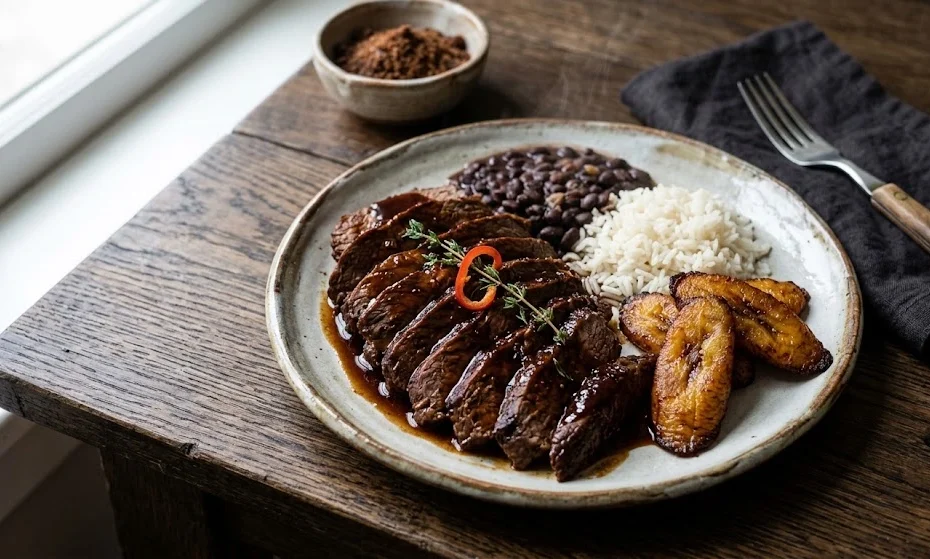
Introduction: That “Burnt” Look Is the Whole Point
You spot it across the dining room: a plate of beef so dark it looks almost black, glossy under a sauce that clings to every slice. Your first thought is is that supposed to be burnt? Your second thought, after the first bite, is why doesn’t all pot roast taste like this?
If you’ve been searching for the best Asado Negro near me, you’re chasing a dish that looks intimidating but tastes like comfort. This guide cuts through the noise. You’ll learn what the dish actually is, how to spot a good plate, what the current recipe conversation looks like, and the one safety number that matters when you make it at home.
Quick Overview: What You Need to Know Right Now
- The black color comes from caramelized papelón (raw cane sugar), not from burning or smoke.
- Eye of round (muchacho redondo) remains the classic cut—lean, cylindrical, and built for slicing.
- The flavor is bittersweet and glossy, balanced by wine, vinegar, garlic, and sweet peppers.
- Restaurants are leaning into arepas and bowls, not just the traditional plated roast.
- USDA guidance is unchanged and clear: whole beef roasts should reach 145°F (62.8°C) with a three-minute rest.
What Exactly Is Asado Negro?
Definition: Asado Negro is a Venezuelan braised beef roast—traditionally eye of round—seared in a dark caramel made from papelón, then slow-cooked in a sauce of wine, vinegar, garlic, onions, and sweet peppers until tender and sliceable.
The name means “black roast,” but the darkness is built, not accidental. According to food writers and cooks, the technique traces to colonial Caracas, where papelón was the local sweetener long before refined sugar was common. The roast is not shredded like pabellón criollo; it’s sliced thin across the grain, then napped generously with its own dark sauce.
That distinction matters when you’re ordering. If the menu says “shredded beef” or “ropa vieja,” you’re looking at a different dish. Asado Negro is a roast that holds its shape on the plate.
How to Find the Best Asado Negro Near You: A 2026 Checklist
Look for the Cut on the Menu
Menus that name eye of round, muchacho redondo, or slow-braised beef roast are more likely to serve the traditional version. If the description only says “beef stew” or “pot roast,” you may be getting a shortcut. Some contemporary kitchens use short rib for a richer, fall-apart texture—that can be delicious, but it’s a variation, not the classic slice.
Ask How the Sauce Is Built
A good server will light up when you ask about the caramel. The best versions start with grated papelón melted into oil until dark mahogany, then the seasoned roast is seared directly in that caramel. If the sauce tastes only of soy or brown sugar, it’s missing the bittersweet depth that defines the dish.
Watch for the Arepa and Bowl Trend
In Miami, Doral, and other Venezuelan food hubs, Asado Negro is increasingly showing up as a filling—in arepas, on cachapas, and in bowl formats. This is a smart way to try the dish if you’re not ready for a full plated roast. The trade-off: arepa fillings are often shredded or chopped, so you lose the sliceable texture of the classic presentation.
Check the Sides
Traditional accompaniments are white rice, caraotas (black beans), and tajadas (fried sweet plantains). Some modern spots serve yuca purée or roasted carrots instead. Neither is wrong—but the classic trio tells you the kitchen is grounded in the source material.
What the Best Plates Have in Common (And What to Avoid)
| Quality Marker | What to Look For | Red Flag |
|---|---|---|
| Color | Deep mahogany-black glaze, glossy but not oily | Pale brown sauce; looks like ordinary gravy |
| Texture | Slices hold together but yield easily to a fork | Shredded meat (a different dish or cut) |
| Flavor | Sweet-tangy depth with a clean beef finish | Cloying sweetness; no vinegar or wine brightness |
| Aroma | Caramel, garlic, and gentle pepper warmth | Sharp burnt-sugar smell |
| Serving temp | Hot throughout, sauce clinging to each slice | Lukewarm center; sauce pooling separately |
A great plate should taste layered, not flat. The sweetness from the papelón has to be kept in check by vinegar or wine, and the beef itself should still taste like beef—not like candy.
The Home-Cook’s Route: Updated Techniques and the One Number That Matters
If you’re not near a Venezuelan restaurant—or you want to learn the dish yourself—the home version is deeply rewarding. Recent recipes have refined the process, but the core steps haven’t changed.
The Caramel Step: Dark Mahogany, Not Acrid Black
The sauce begins with papelón (also sold as panela or piloncillo), an unrefined cane sugar with a molasses-like depth. Melt it in oil over medium heat until it turns a dark amber-mahogany color. The moment it smells sharply acrid instead of warmly toasted, pull it off the heat. That bitterness will not cook out. Many 2026 recipes emphasize constant stirring and lower heat to keep the sugar from crossing into burnt territory.
The Safety Step: 145°F and a Three-Minute Rest
Asado Negro uses a whole muscle roast, not ground beef. The USDA Food Safety and Inspection Service recommends cooking whole beef roasts to a minimum internal temperature of 145°F (62.8°C), measured with a food thermometer, followed by a three-minute rest. That rest lets the juices redistribute and gives you a safer, more tender slice.
Traditional braises often push the meat well past 145°F for a more familiar pot-roast texture. That’s fine—but “usually” is not a safety plan. Use an instant-read thermometer in the thickest part of the roast before you pull it from the oven or pot.
A Current Braise Framework
- Season and marinate the roast with salt, pepper, garlic, and Worcestershire sauce. Overnight marinating is common in 2026 recipes, though a few hours works.
- Sear in the caramel on all sides until the surface is deeply browned—12 to 15 minutes total is a common target.
- Add aromatics—onion, red bell pepper, ají dulce if you can find them—and deglaze with red wine and a splash of vinegar.
- Braise low and slow, covered, until the roast is tender but still sliceable—often 2.5 to 4 hours depending on the cut and pot.
- Rest, chill overnight if possible, then slice thin against the grain and reheat gently in the sauce.
The overnight rest is not mandatory, but it’s the difference between “good” and “why does this taste like a restaurant?” The flavors settle, the sauce thickens, and the slices stay moist.
Leftovers, Storage, and the Arepa Upgrade
Asado Negro is a gift that keeps giving. Leftover slices—especially after a night in the sauce—make one of the best arepa fillings you’ll ever eat. Shred the beef lightly with a fork, warm it in its own sauce, and tuck it into a toasted arepa with a little avocado or grilled cheese.
For storage, keep the sliced beef covered in its sauce in an airtight container in the refrigerator for up to four days. For longer storage, freeze the slices in sauce for up to three months. Reheat gently on the stovetop or in a low oven—high heat will tighten the muscle fibers and dry out the slices.
The Cultural Weight of a Dark Roast
Asado Negro is more than a recipe. It’s a dish that carries the story of Venezuelan home cooking into restaurants abroad, from Caracas to Doral to Denver. The New York Times once described it as “beef the color of a velvet dinner jacket seen across a dark lawn at midnight”—a dish that looks mysterious but tastes like comfort. That tension between dramatic appearance and gentle, sweet-savory flavor is exactly what makes it memorable.
In Venezuela, Asado Negro shares the holiday table with hallaca and pan de jamón. In the diaspora, it becomes a way to anchor a menu, a reminder of Sunday lunches and the smell of caramel hitting a hot pot. Some food writers trace the modern name’s popularity to the 1980s, when marketing and restaurant menus helped codify what home cooks had been making for generations. Whatever the origin story, the dish now functions as a kind of edible identity: dark, sweet, a little bittersweet, and unmistakably Venezuelan.
Key Takeaways
- Asado Negro is a caramel-braised beef roast, not a stew; the black color comes from papelón caramel, not burning.
- Eye of round remains the classic cut; slice it thin against the grain for tenderness.
- Sweetness must be balanced by vinegar, wine, and savory aromatics; if it tastes like candy, something’s off.
- Cook whole beef roasts to at least 145°F (62.8°C) with a three-minute rest, per USDA guidance.
- Arepas and bowls are the current gateway to the dish in many Venezuelan restaurants abroad.
FAQ
What is Asado Negro made of?
It’s a whole beef roast—usually eye of round—marinated with garlic and Worcestershire, seared in caramelized papelón (raw cane sugar), and braised with wine, vinegar, onions, and sweet peppers until tender and sliceable.
Why is it called “black roast” if it’s not burnt?
The name refers to the dark, almost black glaze that forms when the beef is seared in deeply caramelized sugar. The color is a chemical browning reaction, not char.
What should I serve with Asado Negro?
Traditional sides are white rice, black beans (caraotas), and fried sweet plantains (tajadas). Yuca purée or roasted carrots also work well in modern presentations.
Can I make Asado Negro ahead of time?
Yes. Many cooks braise it a day ahead and slice it cold the next day, then reheat the slices in the sauce. The flavor deepens overnight.
Is Asado Negro gluten-free?
The core ingredients—beef, papelón, wine, vinegar, garlic, peppers—are naturally gluten-free, but Worcestershire sauce and some broths can contain gluten. Check labels if you’re cooking for someone with celiac disease.
What’s the best way to find a good Asado Negro near me?
Look for menus that specify eye of round or muchacho redondo, mention papelón or dark caramel, and serve it with traditional sides. Recent reviews for texture and sauce balance help more than star ratings alone.
Conclusion
The search for the best Asado Negro near me is really a search for balance—sweet against tang, dark crust against tender beef, celebration against everyday comfort. Whether you find it sliced on a plate in Doral or make it in your own Dutch oven, the dish rewards attention to detail: the right cut, a patient caramel, a thermometer, and a night in the fridge. That’s how a roast that looks almost burnt becomes the most memorable thing on the table.
You Also Like To Read: What Is CJMonsoon? The 2026 Guide to the Brand, the Products, and the Community