You type “adstotally.com” into Google because something doesn’t add up. Maybe you landed on one of its articles and noticed the site covers everything from AI tools to event insurance. Or maybe a vendor pitched you “ad inventory” on the domain, and you’re trying to figure out what you’d actually be buying.
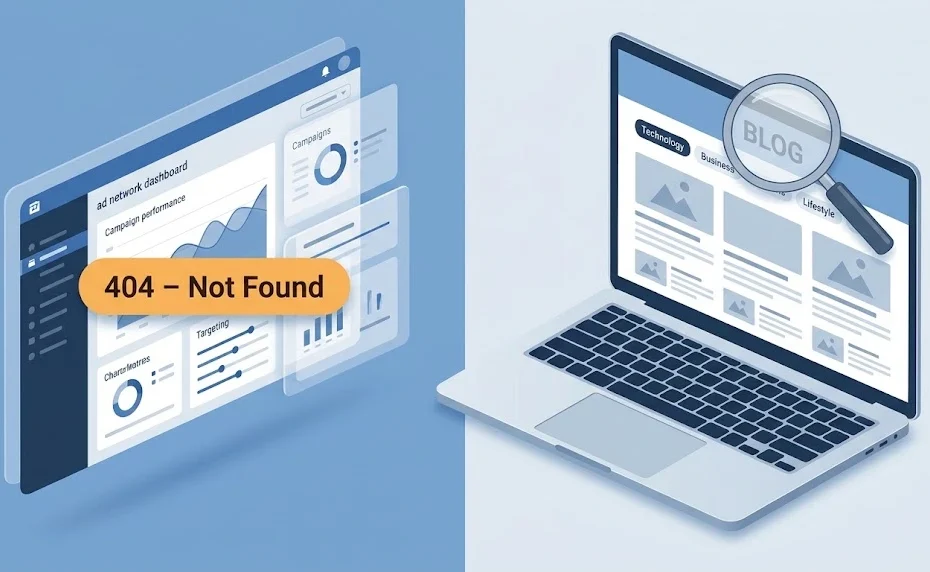
The short answer is simpler than the search results make it seem. Adstotally.com is a general-interest publication. It publishes articles across unrelated topics. It does not sell ads, run campaigns, or pay publishers. The confusion comes from the name, not from anything the site is secretly doing.
Below, you’ll find a straight explanation of what the site is, how multi-topic blogs work, and how to evaluate a website’s real nature without relying on secondhand “reviews” that may be repeating each other.
Quick Overview: Adstotally.com at a Glance
- What it is: A multi-niche blog and online publication, built on WordPress.
- What it is not: An ad network, ad server, or publisher monetization platform.
- Topics covered: Technology, business, finance, health, lifestyle, travel, education, real estate, and more.
- Claimed founding: The homepage says “EST. 2018”; the About page has said “Founded in 2023” in some snapshots, which is one of several sloppy details on the site.
- How it makes money: Display advertising and selective affiliate partnerships—as a publisher, not as a network.
- The core issue: The domain name sounds like ad-tech. The product is editorial content.
Why “AdsTotally” Sounds Like an Ad Platform
Names shape expectations. “Adstotally” contains the word “ads.” Put that in a domain, and a reasonable person assumes there’s a product behind it: a demand-side platform, an ad exchange, a publisher dashboard, something.
That assumption is wrong here, but it’s an understandable one. The ad-tech industry runs on dashboards. Buyers expect to log in, set targeting, upload creative, and watch impressions accrue. When a domain with “ads” in the name doesn’t offer any of that, the gap between expectation and reality becomes the story.
The site itself doesn’t help. Its About page describes an “independent online media publication” that covers technology, finance, health, lifestyle, and other beats. That’s a blog’s self-description, not an ad network’s. A network would talk about inventory, fill rates, and publisher partners. This one talks about articles and explainers.
If someone tries to sell you an “Adstotally campaign” or asks you to install an “Adstotally ad manager,” treat that as a signal to stop and verify. The product those terms imply doesn’t exist on the official domain.
What a Multi-Niche Blog Actually Is
A multi-niche blog is exactly what it sounds like: one website publishing content across several unrelated topic areas, usually grouped into categories. One day there’s a post about artificial intelligence tools. The next, a piece on event insurance. Then a balcony makeover guide.
This model isn’t shady by default. Large general-interest publications have worked this way for decades. The difference is editorial standards and brand clarity. A magazine with a masthead, named editors, and a style guide is one thing. A solo-run WordPress site publishing across a dozen categories is another.
Adstotally.com fits the second pattern more closely. The platform is WordPress, running a commercial theme called “SaasLauncher Agency.” The site lists a small number of author bylines. It accepts guest posts, and it has been listed for sale on third-party guest-post marketplaces. None of that makes it illegitimate. It just means the site is an open publishing operation, not a curated media brand with a specialized editorial mission.
The practical takeaway: when you read something on a multi-niche blog, check who wrote it and whether the site has any stated expertise in that topic. A finance explainer on a general blog is not the same as a finance explainer on a site with credentialed editors.
How to Tell an Ad Network from a Publisher (Without Guessing)
The distinction matters more than most people realize, because the two sit on opposite sides of the transaction. An ad network sells inventory on behalf of publishers. A publisher displays ads on its own pages and gets paid by a network. Confusing one for the other leads to wasted outreach and misplaced trust.
Here’s the simplest test: look for the login.
A working ad network has advertiser-facing infrastructure. You’ll find a sign-up flow, a campaign builder, targeting controls, billing, and reporting. A publisher monetization platform has publisher-facing infrastructure: ad code generators, earnings dashboards, payment settings.
On Adstotally.com, none of that exists. There’s no advertiser sign-up, no campaign interface, no publisher payout system. What you find instead is a homepage organized by article categories. The site is a consumer of ad networks, not a provider of one.
This is where transparency standards become relevant. When content and commerce mix, readers deserve to know which is which. The U.S. Federal Trade Commission’s guidance on native advertising is explicit: it’s deceptive to mislead consumers about the commercial nature of content, and disclosures must be clear and prominent—not buried in fine print. That principle applies whether the publisher is a legacy newspaper or a WordPress blog. If a site publishes sponsored posts or affiliate-driven content without labeling it, that’s a transparency problem, regardless of the site’s size.
The “Review Echo” Problem: Why Search Results Can Mislead You
Search for Adstotally.com and you’ll find pages of “reviews.” Many repeat the same phrasing. Some claim the site is a sophisticated ad platform. Others insist it’s a blog. The sheer volume feels like consensus.
It isn’t. It’s an echo.
A cluster of low-cost SEO sites publish template-style “reviews” of domains, often without ever opening the site they’re writing about. One description gets copied, paraphrased, and republished across multiple domains. After a few cycles, the copied claim starts to look like independent corroboration. It’s not. It’s the same claim wearing different domain names.
This pattern has a name in the broader web-quality conversation. Content farms produce large volumes of material designed to attract search traffic and ad revenue, prioritizing quantity over depth. The review-echo ecosystem is a close cousin: pages engineered to rank for “is [domain] legit” searches, not to provide verified evidence.
The practical defense is straightforward. Open the domain yourself. Read the navigation menu. Look for a login. Read the About page and notice whether the details are consistent. You’ll learn more in five minutes of direct inspection than from ten “reviews” that never state what they actually checked.
The Trade-Offs of the Multi-Niche Model
Multi-topic publishing has real advantages. It lets a site chase search demand wherever it appears. It lowers the cost of content production because you’re not maintaining deep expertise in a single vertical. It can build domain authority through sheer breadth of coverage.
The costs are equally real. Search engines struggle to categorize a site that covers everything, which can dilute topical authority. Readers have no clear reason to return unless a specific article found them through search. Editorial accountability gets thin when a site publishes across finance, health, real estate, and home improvement without named specialists in any of those areas.
For readers, the implication is simple: enjoy the articles that are useful, but calibrate trust by topic. A general-interest blog can publish a perfectly helpful piece on productivity software. It is a weaker source for medical or financial guidance, where credentials and accountability matter more.
For marketers evaluating guest-post opportunities, the calculation is different. A multi-niche blog may offer placement at a low price. What it cannot offer is a focused audience with demonstrated interest in a specific vertical. You’re buying a link on a general site, not access to a community. Whether that’s worth it depends on your goal—and on whether the site discloses paid placements clearly.
What to Do If You Encounter This Domain
If you’re a reader: treat it like any general-interest blog. Enjoy what’s useful. Check bylines. Don’t use it as a substitute for professional advice on money, health, or law.
If you’re a marketer expecting an ad product: stop. The platform you’re imagining doesn’t exist here. If a third party is selling “Adstotally inventory,” ask for a screenshot of the advertiser dashboard. The request will end the conversation quickly.
If you’re considering a guest post: look at the site’s disclosure practices. Are sponsored placements labeled? Is there a real editorial policy? Is the audience measurable? Those questions matter more than the domain’s monthly traffic estimate, which in this case has been reported at roughly 3,900 organic visits—a modest number that’s almost entirely homepage traffic.
If you’re just curious what the site is: it’s a blog. The name oversells. The product is articles. That’s the whole answer.
Key Takeaways
- Adstotally.com is a multi-niche blog, not an advertising network. The name creates the wrong expectation.
- The site has no advertiser dashboard, campaign builder, or publisher payout system. It’s a publisher, not a platform.
- Search results for the domain are crowded with template-style “reviews” that often repeat each other rather than verify anything.
- Multi-niche publishing is a legitimate model with real trade-offs: broad reach in exchange for diluted topical authority and thinner editorial accountability.
- The most reliable way to judge a website is direct inspection, not secondhand claims about what the site supposedly is.
FAQ
Is Adstotally.com an advertising network?
No. It’s a general-interest blog and online publication. There’s no advertiser sign-up, campaign interface, or publisher payout system on the site. The name suggests ad-tech, but the product is editorial content.
Why does Adstotally.com have “ads” in its name if it’s a blog?
That’s the root of the confusion. Domains containing “ads” usually belong to ad-tech products. Here, the name oversells what the site actually does. The site describes itself as an independent media publication covering multiple topics.
Is Adstotally.com a scam?
It’s a real, working website with published articles, policy pages, and HTTPS. It’s not a scam in the sense of being fake. It is, however, a general blog with some sloppy details—conflicting founding dates and leftover template text have been observed—so calibrate your trust accordingly.
Can I buy ad space on Adstotally.com?
If someone offers to sell you an “Adstotally ad campaign,” ask for proof of a working advertiser dashboard. Based on what’s publicly visible on the domain, no such product exists. The site displays third-party ads as a publisher, but it does not sell ad inventory as a network.
Is it worth writing a guest post for Adstotally.com?
That depends on your goal. The site accepts guest posts and has been listed on guest-post marketplaces. It offers placement on a general-interest domain, not access to a specialized audience. Check disclosure practices and audience data before paying for placement.
What’s the difference between a blog and an ad network?
An ad network sells ad inventory on behalf of many publishers and provides advertiser tools like campaign setup, targeting, and reporting. A blog is a publisher: it creates content, displays ads on its own pages, and earns revenue from networks or affiliates. They sit on opposite sides of the transaction.
Conclusion
The confusion around Adstotally.com isn’t a mystery. It’s a naming problem wrapped in an SEO problem. The domain sounds like ad-tech, the search results are cluttered with recycled “reviews,” and the site itself is a general-interest blog that doesn’t try very hard to correct the record.
If you take one thing from this article, make it this: open the website. Look for the login. Read the navigation. Notice whether the About page agrees with itself. The truth about a website is usually visible on the website, not in the articles written about it. Adstotally.com is a blog. That’s not a scandal. It’s just a name that promised something else.
You Also Like To Read: Logistics Business Category Classification: A Clear Guide for Beginners and Professionals